20/10/2026 07:16
Price, Cleaning or Floor Space? YouTube Search Terms for Cambodian Rice-Mill Shops
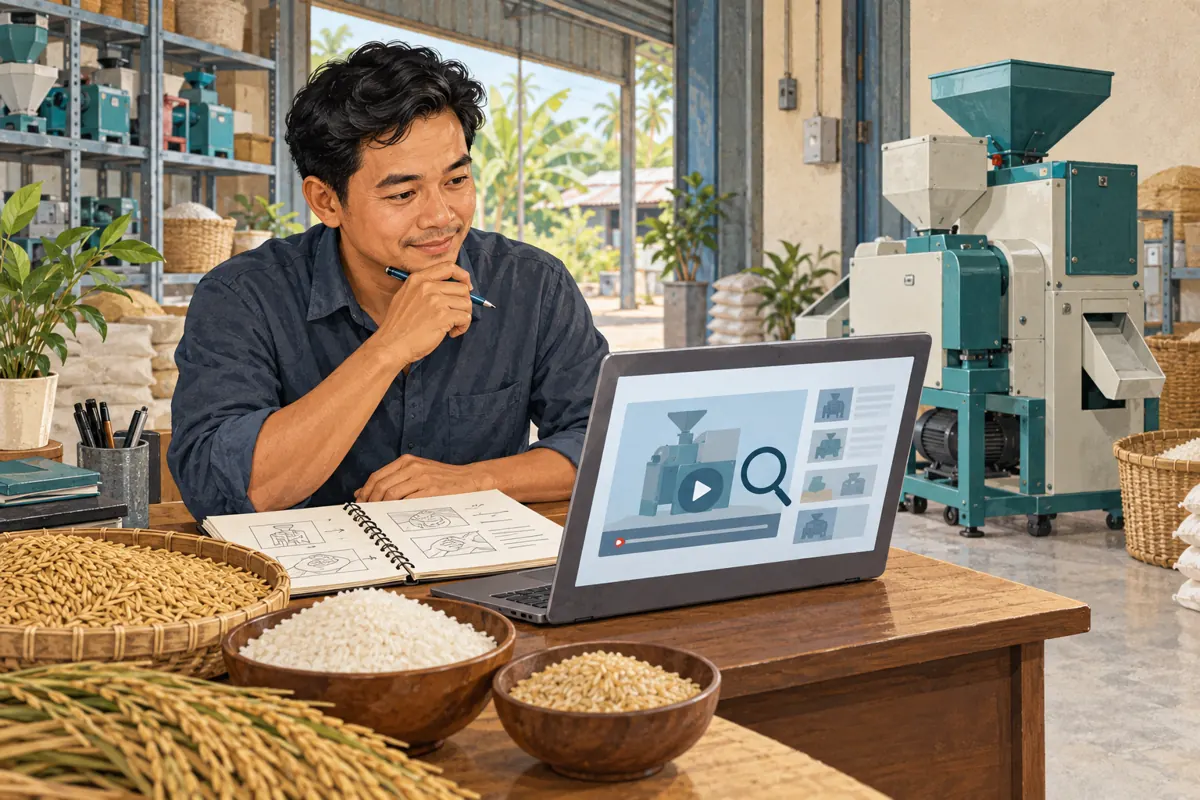
A rice-mill demonstration can attract people with very different questions. Someone comparing purchase costs needs a different answer from an existing owner looking for cleaning information. Another viewer may simply want to know whether the machine fits their workspace. For Cambodian equipment shops, identifying those differences can make social promotion more useful. YouTube search terms offer clues about how viewers found an existing video, but they require careful interpretation. This workflow turns those clues into a focused demonstration and a practical enquiry process. It also explains why an SMM-panel view offer cannot establish what customers need or whether they are ready to buy.
1. Start with one decision your next video should support
Choose one existing demonstration of a machine your shop can still explain and supply accurately. Write down the decision you want a prospective customer to make after watching. For example, they might decide whether to request a quotation, send workspace measurements or ask about model-specific care. Avoid starting with a target view count: it does not tell the presenter which question to answer.
In a hypothetical Battambang equipment shop, an overview video shows a compact rice mill from several angles. Staff keep receiving vague messages asking whether it is suitable. The shop decides its next video should help people describe their available space before requesting a quote. That gives the review a concrete purpose. Search terms can now help staff check whether space-related questions appear among the routes into the overview, alongside price and maintenance questions.
2. Find the search report and preserve its context
YouTube’s official reach guidance describes the desktop route as YouTube Studio, Content, the selected video, Analytics, then Reach. Look for the YouTube search terms report. It shows terms viewers searched when they found that content. Some reports are unavailable on mobile, so try desktop if the relevant detail is missing. Interface wording may vary as Studio changes.
Make a short working note containing the video title, URL, selected date range, review date and visible phrases. Keep the original wording beside your interpretation. If you extend the date range later, record that change instead of silently combining the results. A simple note such as ‘phrase observed on this video during this period’ is more accurate than ‘Cambodian customers want this.’ The former describes evidence; the latter adds assumptions about location, identity and intent that the phrase alone cannot support.
3. Separate search discovery from other routes
The same YouTube guidance distinguishes search traffic from external websites or apps linking to or embedding a video. Direct or unknown traffic can include typed URLs, bookmarks and unidentified sources. Keep those categories separate when reviewing promotion. A link shared outside YouTube does not automatically become evidence that viewers searched for the machine.
Suppose, hypothetically, the Battambang shop shares its overview in an appropriate community discussion after answering a member’s equipment question. Later activity might reflect that distribution, unrelated discovery or several routes together. Record when and where the link was shared, but do not assign every subsequent view to that action. Likewise, an unidentified source is an unresolved category, not a reason to label the traffic fraudulent. The practical question is whether you have enough evidence to choose a useful next explanation, rather than enough numbers to tell a confident success story.
4. Sort phrases by the question they might contain
Create three working groups: buying costs, ownership and care, and physical suitability. These are editorial categories your team chooses, not official YouTube labels. Hypothetical phrases such as ‘small rice mill price,’ ‘rice mill cleaning’ and ‘compact mill dimensions’ belong in different groups because each suggests a different information need. Leave ambiguous phrases unclassified until someone familiar with the equipment reviews them.
Preserve Khmer wording, Latin-script spellings and genuine model names as they appear in your own report. Ask a fluent colleague to explain unclear language without rewriting the evidence. A short phrase might refer to a spare part, a machine category or a particular model. Record possible meanings when necessary. Do not treat English wording as proof of a foreign viewer, or Khmer wording as proof of a Cambodian buyer. Language helps you plan an understandable answer; it does not establish someone’s location or purchasing authority.
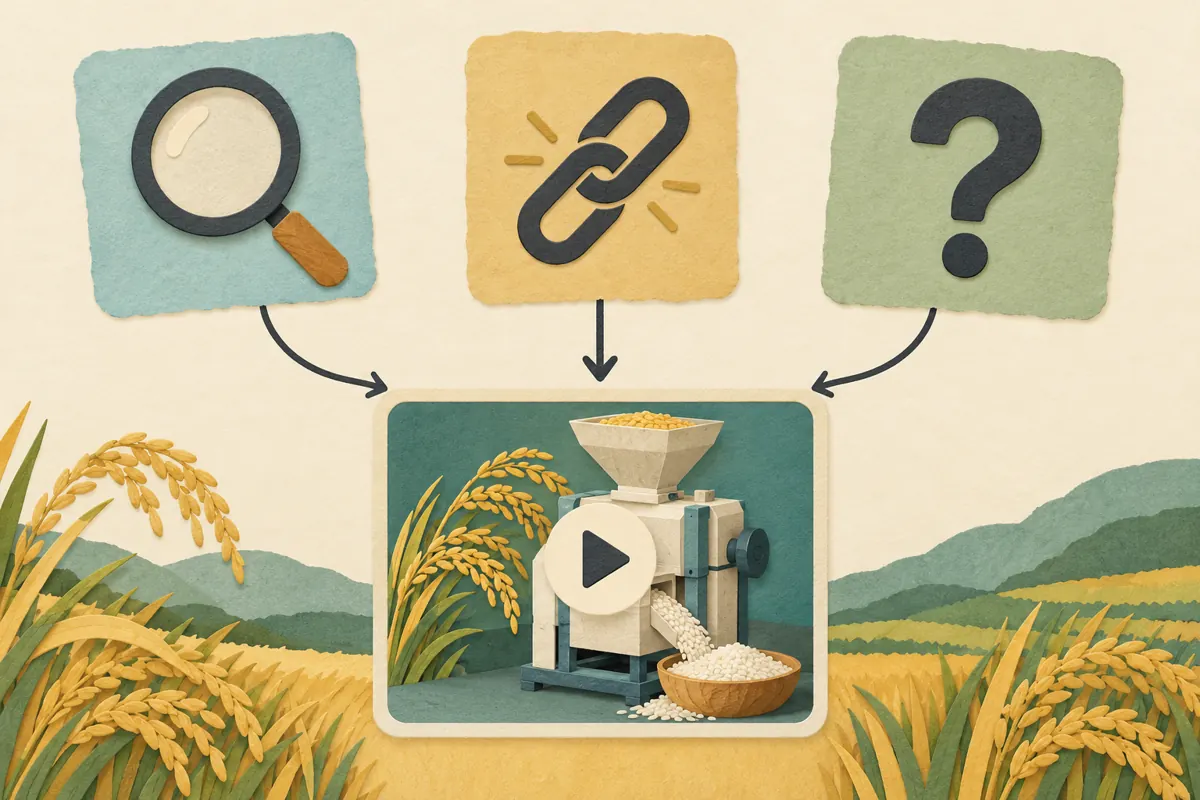
5. Choose a question you can answer with reliable evidence
Assess each topic against three practical tests: does it relate to equipment you actually handle, can you demonstrate the answer accurately, and would that answer improve the next customer conversation? A frequently observed phrase can still be a poor topic if it refers to another machine or requires expertise your shop does not have. A modestly represented question may deserve attention when staff repeatedly encounter it at the counter.
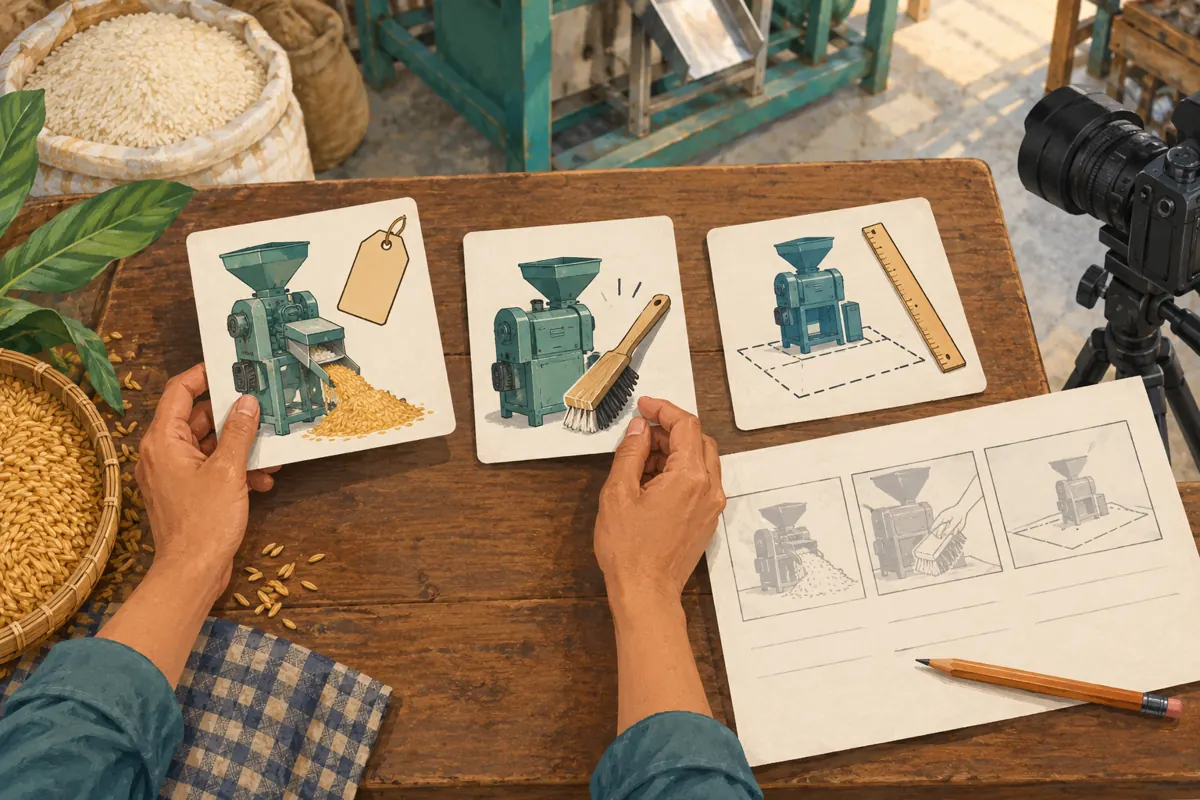
For the hypothetical space-focused video, staff verify the exact model and its documented dimensions before filming. They distinguish the machine’s footprint from the additional room needed for operation, access and servicing, using the manufacturer’s requirements for that model. They avoid suggesting that a machine fits safely wherever its base fits. If the report instead points toward cleaning, the shop should consult the model’s instructions and a qualified technician before making a demonstration. Search interest does not validate a technical procedure.
6. Turn the chosen question into a narrow demonstration
Build the video around a clear promise, visible evidence and one next step. For the hypothetical floor-space topic, begin by identifying the machine and explaining that the video covers space planning. Show the relevant measurements clearly, describe any documented clearance requirements, and finish by telling viewers what information to send for an initial discussion. Keep unrelated price negotiations and servicing explanations for separate content.
Use the language your intended customers understand, with a fluent reviewer checking spoken explanations and captions. Keep genuine model identifiers consistent between the machine, video and enquiry instructions. A title such as ‘Checking Space for This Compact Rice Mill’ is useful only if the demonstration actually answers that question. Avoid adding popular phrases about output, cleaning or cheap prices merely because they appeared in the report. Every promise in the packaging should have a corresponding explanation viewers can find in the video.
7. Give interested viewers a manageable next step
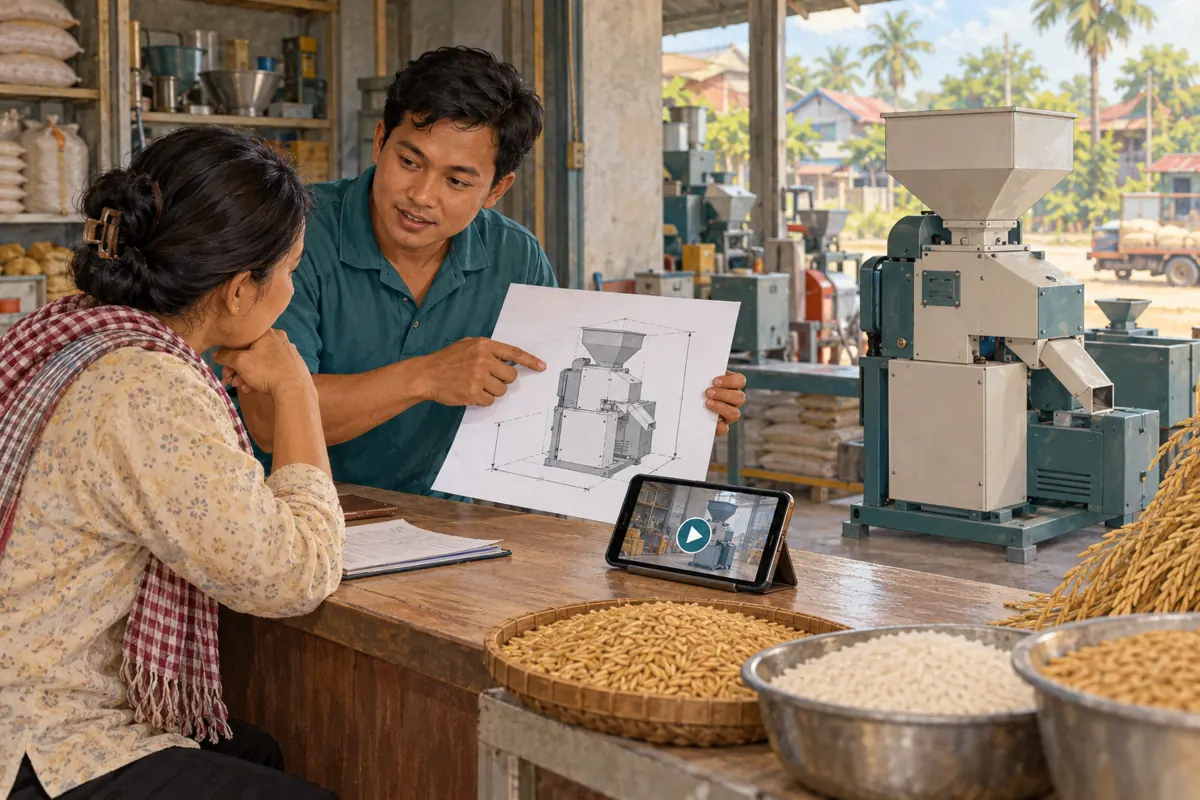
Ask for the smallest set of details that helps staff respond. For a space discussion, that could be the model shown, available workspace dimensions and a general delivery area. Explain that an initial conversation is not a final installation assessment. Let customers provide additional technical details through the shop’s normal private contact route rather than posting identifying documents or a full address in public comments.
Prepare a response that follows the video’s purpose. In the hypothetical example, staff acknowledge the customer’s measurements, identify what remains unclear and explain what they need before assessing suitability. If someone asks only about price, answer that question honestly and clarify the configuration covered by any quotation. Do not force every person through the same script. The video should reduce repeated explanations while preserving room for real requirements that a short search phrase could never reveal.
8. Evaluate SMM-panel offers against the actual task
The supplied moha-smm.com catalogue includes the exact public name ‘Youtube Views ~ Video/Shorts ~ Max 10M ~ 50k/days ~ Instant ~ 𝐍𝐎 𝗥𝗘𝗙𝗜𝗟𝗟’. Its title presents it as a views service for videos or Shorts. The supplied description is empty, so delivery methods and the title’s other claims cannot be verified from this brief. Nothing supplied establishes Cambodian targeting, genuine interest, official advertising delivery or qualified enquiries.
For this workflow, buying a count cannot answer whether customers need price, care or space information. YouTube’s Fake engagement policy prohibits artificial metric inflation and explains that a hired promoter’s actions can affect the channel. Reject methods that conflict with that policy. Purchased engagement is not evidence of sales or local demand. If a team has already used a service, retain its records as context for interpreting the period; do not present the resulting count as proof that the new demonstration attracted suitable buyers.
9. Handle missing data without manufacturing certainty
YouTube’s limited-data guidance says low-volume search terms and external URLs may not appear. It also explains that report totals can include data omitted from individual rows. Extending the period or removing filters may reveal more information, but the platform does not publish its reporting thresholds. A blank or sparse report therefore cannot establish that nobody has the question.
When the evidence is thin, use a clearly labelled alternative source: questions received at the counter, support conversations or a salesperson’s observation. Keep these separate from Analytics findings. For example, write ‘staff-reported space question; not visible in the selected search report.’ That note justifies a helpful experimental video without pretending to have measured a market trend. Do not buy engagement to try to fill the report, and do not keep widening the period until a convenient phrase appears while ignoring changes in stock or content.
10. Review whether the explanation improved the conversation
Choose a review date before sharing the new video. Record the actual distribution actions, any changes to the title or description, and the questions that arrive afterward. Assess whether people identify the machine more clearly, provide relevant information or reveal a missing explanation. These observations can guide the next edit even when there are too few enquiries to support a broader conclusion about demand.
Common mistakes include treating every search phrase as a buying signal, merging different models into one topic, and changing several content elements before checking what happened. Another is claiming that enquiries increased because of the video when staff also changed distribution, availability or response times. Write a restrained conclusion instead: what was observed, what remains uncertain and what the shop will improve next. If customers still confuse machine footprint with required working space, revise that explanation before spending more effort promoting the same unclear message.
Frequently asked questions
Do search terms tell us which rice mill to stock?
They can suggest questions worth investigating, but they do not establish purchase volume, budgets or model demand. A phrase may come from an existing owner, a researcher or someone outside your service area. Before changing stock, compare the topic with actual enquiries, configuration requirements and confirmed orders. Use the report to improve explanations, then gather the commercial information needed for inventory decisions.
Should we rewrite a Khmer video title around an English search phrase?
Only if the wording accurately describes the video and helps the intended audience. First establish whether the phrase is a genuine model identifier, a translation or a different equipment category. A clear Khmer title can retain an essential model name without becoming a string of English keywords. Ask a fluent reviewer to check meaning and readability before changing the public title.
What should a new channel do when no useful terms appear?
Start with a specific question your shop actually receives and label that as the source of the idea. Film an accurate answer, share it where it is relevant and record subsequent questions. You can revisit Analytics later. Missing search details are a limitation of the available evidence, not an instruction to invent demand or purchase views to make the channel look established.
Can an SMM-panel delivery record prove that promotion reached Cambodia?
No. A delivery record describes the service transaction or reported delivery; it does not independently establish viewer location, authentic attention or buying intent. The supplied YouTube service description provides no supporting detail for Cambodian targeting. Keep service records separate from customer enquiries and sales records, and do not turn a purchased count into a claim about local market interest.
Should price and cleaning questions always become separate videos?
Separate them when combining them would weaken the main explanation or attract viewers expecting different answers. A short overview can briefly acknowledge both, but a detailed quotation discussion and a model-specific care demonstration have different purposes. Choose the format by the question you can answer completely. Never imply that a general promotional overview replaces the manufacturer’s instructions or qualified technical advice.
Explore the current service catalogue, create an account, or ask a specific question through support tickets.
- YouTube Help: Understand your YouTube video reach
- YouTube Help: Understand limited data in YouTube Analytics
- YouTube Help: Fake engagement policy
- YouTube Help: Get started with YouTube Analytics
Prepared with AI assistance. Illustrations explain the workflow and do not represent customer results.