21/10/2026 18:33
Whole Screen or Mesh Detail? YouTube Thumbnail Testing for Cambodian Insect-Screen Shops
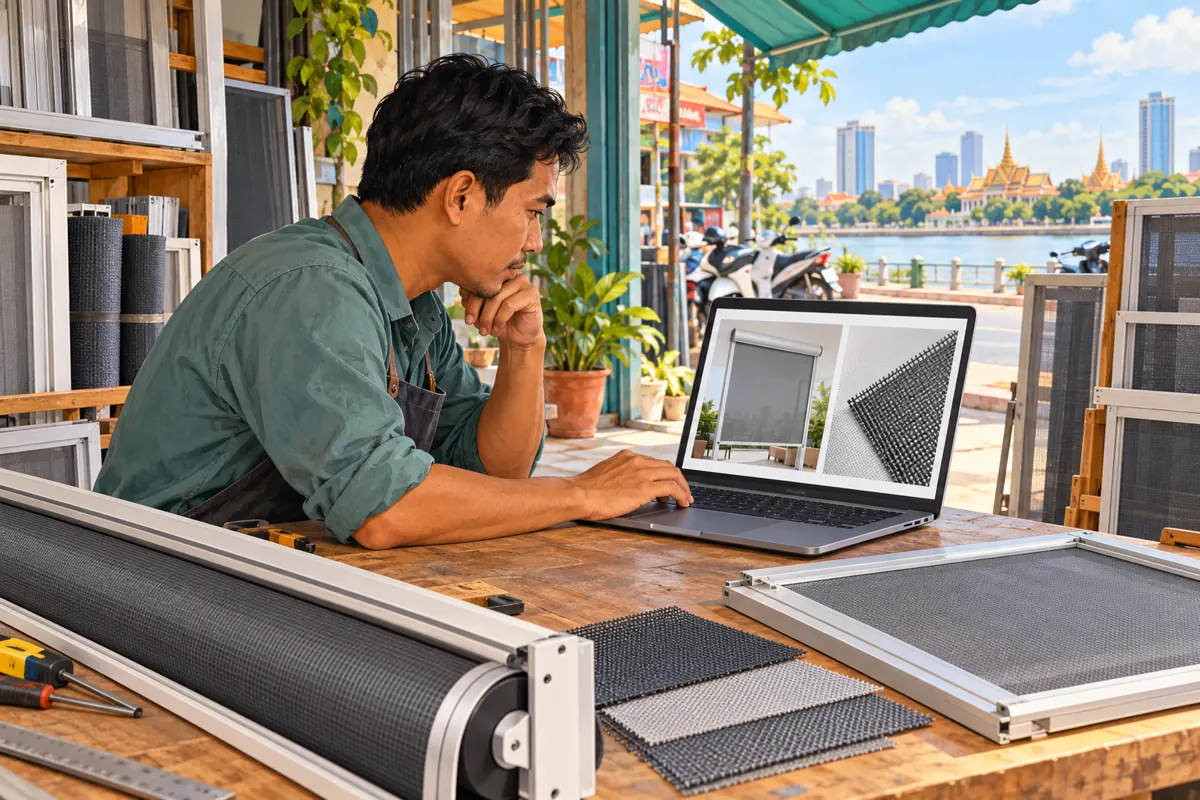
A close-up of fine mesh can show workmanship, yet leave viewers unsure what the shop actually sells. A photograph of a complete window screen can establish the product immediately, but hide the detail that makes the demonstration useful. For a Cambodian insect-screen workshop promoting a YouTube video, choosing between those images is a practical communication decision. This guide uses a hypothetical Phnom Penh workshop to explain how to prepare a focused thumbnail test, interpret the outcome and connect the lesson to future promotion. It also explains why an SMM panel service cannot establish which image attracts suitable local buyers. The aim is a clearer promise before someone watches, followed by a useful route to an enquiry.
1. Start with the misunderstanding you want to resolve
In this hypothetical example, the workshop makes roller insect screens for windows. Its demonstration shows the complete assembly, the mesh meeting the frame and the movement of the bottom rail. Some enquiries concern replacement mesh alone; others concern a complete installation. The thumbnail question is therefore specific: should the first image establish the complete product or emphasize its construction?
Write that question before designing anything. Record what the video actually explains and what it leaves out. If it demonstrates operation but does not teach installation, none of the candidate images should suggest a full installation lesson. A useful test begins with several truthful ways to introduce the same content. It should not compare an accurate image against an exaggerated promise that the video cannot fulfill.
2. Choose a demonstration that will remain useful
Select a video about a product the workshop still supplies and understands well. Avoid starting with a temporary discount, an unavailable frame finish or a customer installation whose permission is uncertain. The test will be easier to interpret if the product, explanation and next step remain relevant throughout the review period.
Watch the opening before making the thumbnails. Does it quickly establish that the object is a roller insect screen? Does the demonstrated mechanism match the product shown in the candidate images? If the opening is confusing, resolve that editorial problem first. Otherwise, the team may spend time refining the invitation while leaving the explanation unclear. Keep a short note identifying the model, demonstration purpose and footage used for each candidate.
3. Build distinct images around one product
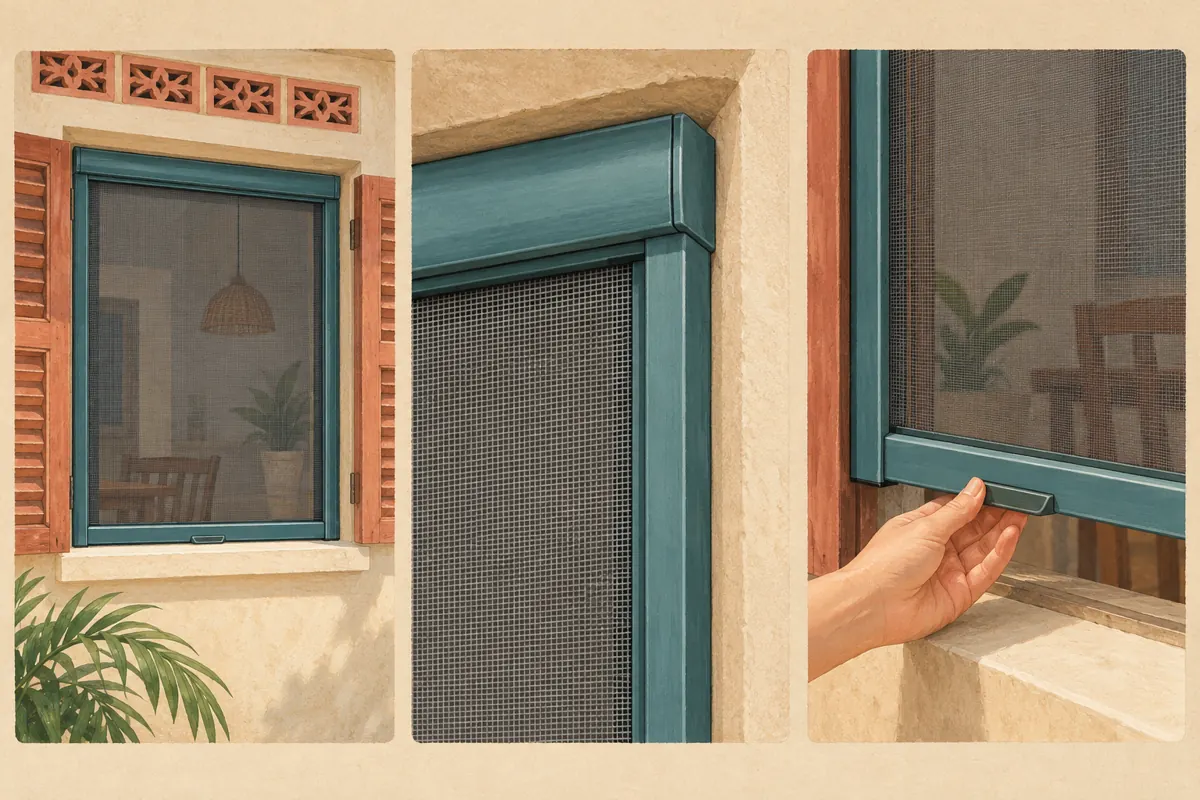
Prepare a whole-product version showing the screen in its window opening. Leave enough surrounding frame to explain its shape, but remove distracting workshop clutter. Prepare a detail version showing the mesh and frame junction, with enough recognizable structure to avoid making it look like loose fabric. An optional third version can show a hand operating the bottom rail.
Use photographs from the same demonstration or a matching product session. Keep the finish, lighting quality and background treatment reasonably consistent. This makes the visual emphasis the main creative difference. Do not add a different product, an unsupported protection claim or an installation accessory that is sold separately. The explanatory illustrations accompanying this article are conceptual; a shop's actual thumbnail should accurately represent its own demonstrated item.
Give the files descriptive internal names such as whole-screen, mesh-corner and rail-operation. These names make the final discussion more useful than remembering an image as the pretty one or the blue one.
4. Check comprehension before testing performance
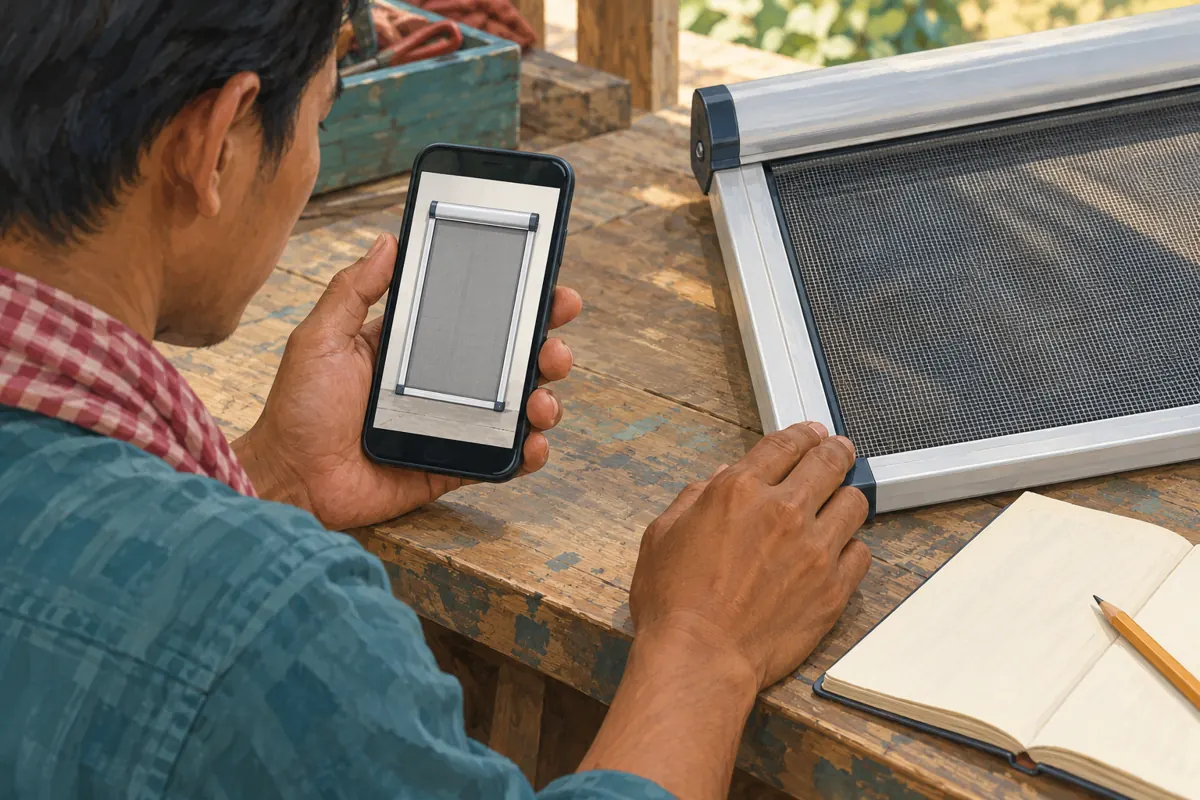
Show each candidate at a small size on an ordinary phone. Ask a colleague who did not design it what product they expect to see and what they expect to learn. Record their answer without explaining the image first. This is an informal comprehension check, not a statistically representative audience study.
For customers who usually communicate in Khmer, any thumbnail wording should use natural Khmer checked by a fluent reader. Keep genuine model names where necessary, but avoid packing dimensions, installation conditions and several selling points into the image. A recognizable product photograph may need very little text. If the colleague identifies the mesh close-up as a curtain or fabric sample, widen the crop before putting it into the test. Testing an avoidable ambiguity wastes a useful comparison.
5. Use the native test when the video is eligible
YouTube documents A/B testing in desktop Studio for channels with advanced features. Eligible videos can test up to three options; Shorts, private videos, made-for-kids content and age-restricted content are excluded. For this workflow, open the video through Content, find A/B Testing under Thumbnail, choose Thumbnail only, upload the candidates and select Done. Keep the title fixed.
YouTube runs the alternatives concurrently and evaluates watch time share. Completion can take up to two weeks. Changing the title or thumbnail during the test stops it. Review the result in the video's Details or Analytics Reach area. These feature details come from YouTube's official A/B testing guidance listed in the sources.
Assign one team member to manage the experiment. Keep a simple internal note containing the video address, candidate filenames, question being tested and start date. This preparation helps prevent another colleague from replacing an image during routine promotional work.
6. Keep promotion decisions understandable
Before starting, list any planned sharing of the demonstration: a workshop page post, a message to an interested customer or a relevant community discussion where sharing is permitted. Keep ordinary promotion useful and accurately described. Avoid suddenly changing the offer, audience message and thumbnail concept together, because the resulting business activity becomes harder to explain.
If another campaign begins during the test, record its timing and purpose. That note does not let you recalculate YouTube's experiment or isolate each campaign's effect. It simply prevents the team from later claiming that every new enquiry came from the thumbnail change. Do not ask staff to repeatedly watch the video or recruit people to manufacture engagement. People should encounter the demonstration because it answers a relevant question.
7. Treat SMM catalogue entries as claims requiring scrutiny
The supplied moha-smm.com catalogue includes the exact public service name “YouTube Like ~ Max 100k ~ 50k/days ~ Instant ~ 𝐍𝐎 𝗥𝗘𝗙𝗜𝗟𝗟”. Its title identifies a likes offering, but the supplied description is empty. That leaves no supporting explanation of the delivery method, audience or relationship to thumbnail exposure. The words in the service name are catalogue wording, not independently verified performance evidence.
For this workflow, ordering likes would not answer the thumbnail question. Purchased engagement is not evidence of genuine interest, Cambodian viewers, sales or official advertising delivery. It also cannot demonstrate that a particular candidate helped a prospective customer understand the product.
YouTube prohibits artificially increasing engagement and warns that a hired promoter's actions can affect the channel. Review that official policy before considering a service. If a provider cannot explain a compliant method, do not proceed. Keep any existing service records separate from the editorial test, and never describe a panel order as validation of a winning image.
8. Read the outcome without inventing a sales conclusion
YouTube can report Winner, Performed Same or Inconclusive. Its result concerns watch time share, not completed purchases. If no clear winner emerges, the first uploaded option becomes the default, although you can choose another afterward. An inconclusive result is not proof that the images are equally effective.
In a hypothetical outcome where the whole-screen image wins, the practical lesson is limited: that presentation performed better within this experiment. It does not establish that Cambodian homeowners prefer it, that installation enquiries increased because of it or that every future video needs a wide photograph.
If there is no decisive result, choose the most accurate and understandable image using the earlier comprehension check. Record the decision as an editorial choice. Do not repeatedly rerun almost identical candidates merely to obtain a preferred outcome. A future test should answer a new, useful question or compare meaningfully improved alternatives.
9. Keep a separate record of useful enquiries
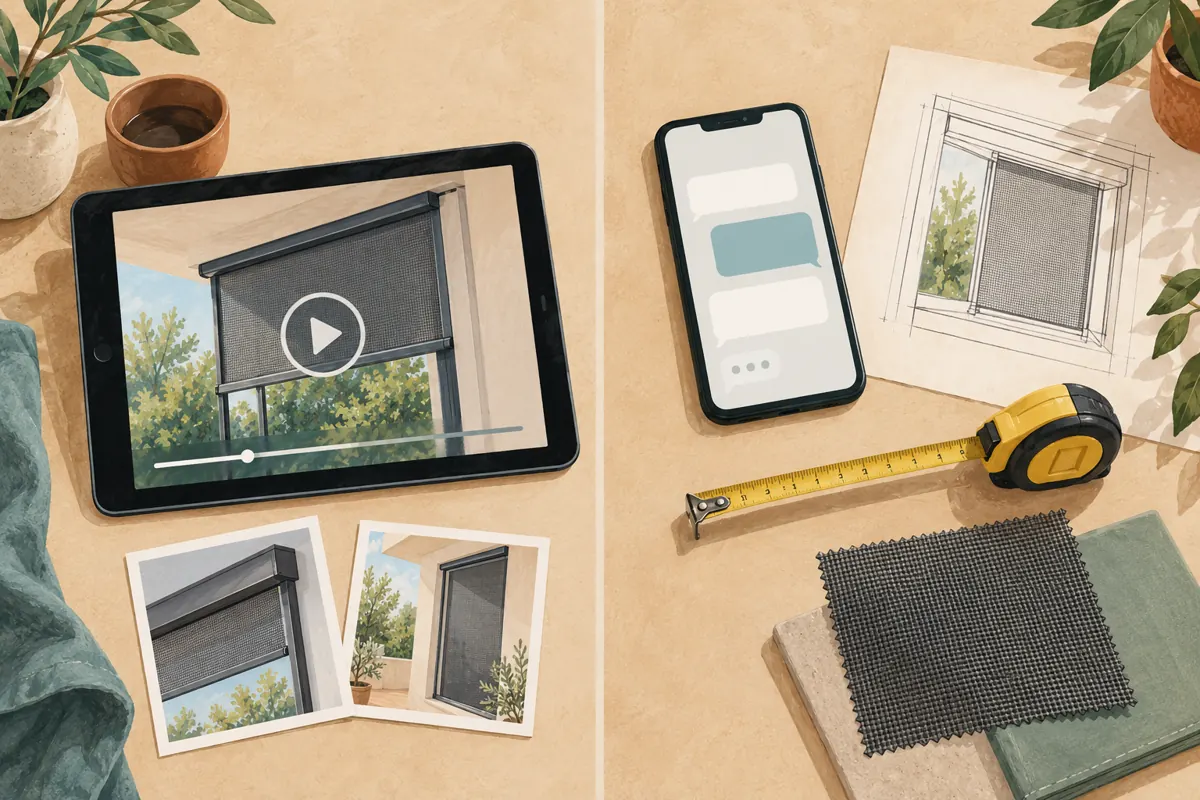
For this hypothetical workshop, a useful enquiry might identify the window type, approximate opening size and installation area. Those details help staff decide what information to request next. Ask for measurements with clearly explained reference points; an inside opening measurement and an outside frame measurement should not be treated as interchangeable.
When customers volunteer that they saw the demonstration, record that as their stated source. If they remember the picture, their recollection can inform qualitative discussion, but it does not reliably assign them to a test variant. Keep personal addresses and customer photographs out of the thumbnail review document.
Read enquiries for repeated misunderstandings. If people still assume that fitting is included, improve the offer explanation. If they cannot identify the mechanism, consider a clearer demonstration. These are substantive content decisions that a thumbnail experiment alone cannot settle.
10. Turn the lesson into a repeatable workshop routine
Close the review with three short statements: what the team tested, what the platform reported and what the shop will do next. For example, a hypothetical note could say that whole-product and detail images were compared, the result was inconclusive and the whole-product image was retained because colleagues recognized the item more readily. This preserves the distinction between measured output and editorial judgment.
Avoid common mistakes such as comparing one image this week with another next week and calling it a controlled experiment, changing the title halfway through, or treating a reaction count as customer research. Another mistake is copying the chosen visual onto every product without checking whether the next demonstration answers the same question.
For the next filming session, capture a clean whole-product photograph, a meaningful detail and an operation photograph while the setup is ready. This small production habit creates honest alternatives without requiring a separate shoot whenever the workshop wants to improve its promotion.
Frequently asked questions
Should a small workshop prepare two thumbnails or three?
Start with two if they express the actual decision clearly. A complete screen and a meaningful detail may be enough. Add an operation image only when it offers a distinct, truthful introduction. Producing a weak third option simply to fill a slot adds work without improving the question.
What if the channel cannot access the testing feature?
Check the eligibility guidance linked in the sources. Meanwhile, use the phone-size comprehension review to select an accurate image. Keep that decision labelled as an editorial assessment. Manually changing thumbnails on different days does not recreate the same comparison, because the viewing circumstances may also change.
Can a likes service help a low-traffic test reach a conclusion?
A likes order does not supply evidence that suitable viewers encountered the thumbnail alternatives and chose to watch. It introduces a separate service activity with its own uncertainties and potential policy issues. If the available evidence is insufficient, retain a clear image and accept the uncertainty instead of trying to manufacture a result.
Should the image include an installation price?
Only consider a price when it is accurate, current and understandable with its conditions. For a demonstration about screen operation, a price can distract from the learning promise. Where quotations depend on dimensions, access or fitting requirements, explain those conditions in the offer and enquiry process rather than compressing them into a thumbnail.
Does the chosen thumbnail prove the video is ready for wider promotion?
No. Review the demonstration's accuracy, current availability and enquiry route as well. A clear image cannot repair an outdated offer or an unanswered contact channel. Promote when the complete experience helps someone understand the product and take a sensible next step, while keeping any performance claims within the evidence actually available.
Explore the current service catalogue, create an account, or ask a specific question through support tickets.
Prepared with AI assistance. Illustrations explain the workflow and do not represent customer results.