19/10/2026 22:07
Where Does the Assembly Demo Lose Viewers? YouTube Retention for Cambodian Furniture Shops
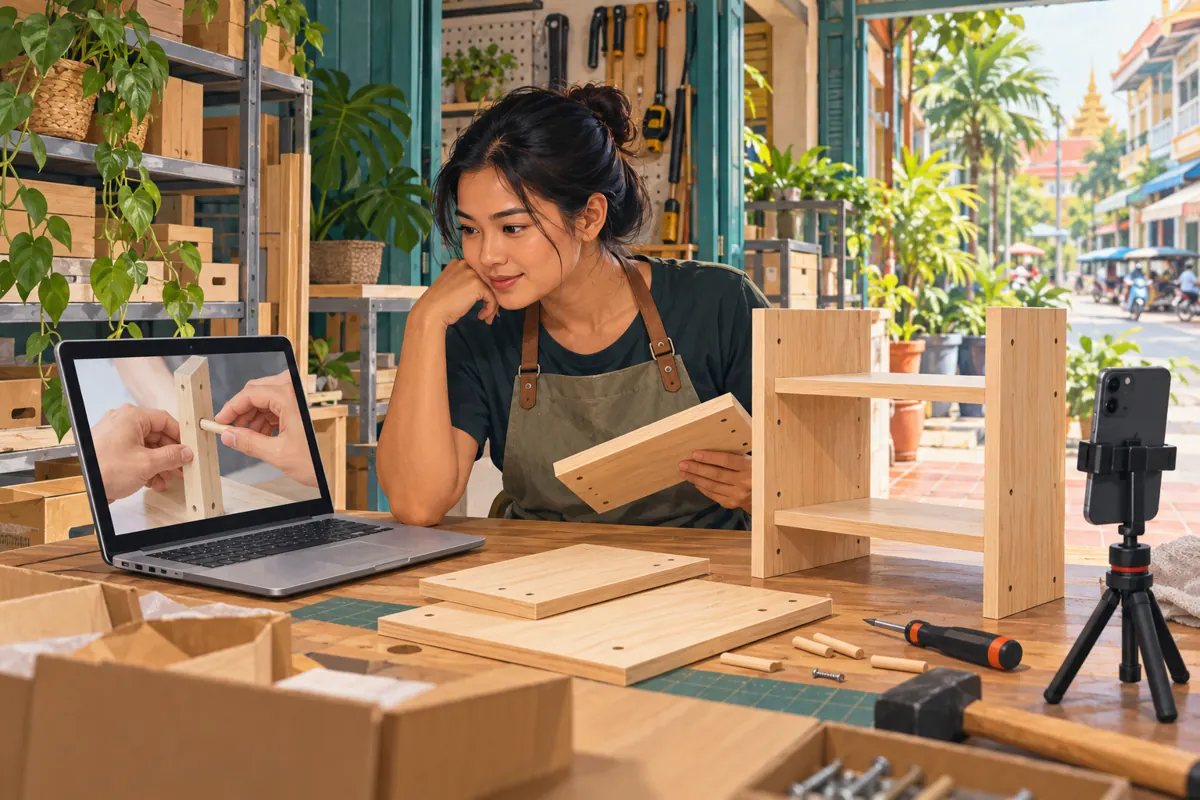
A furniture assembly video can attract attention while leaving its most important instruction unclear. For a Cambodian shop selling flat-pack shelves or desks, the useful question is whether viewers can identify the parts and follow the next action. YouTube audience retention can help locate moments worth reviewing, but it cannot explain every departure or prove that someone wants to buy. This workflow connects viewing patterns with the actual footage, a practical comprehension check and one manageable filming change. It also explains why ordering engagement through an SMM panel cannot establish that your demonstration works.
1. Choose one customer task before opening analytics
Start with a narrow purpose: helping a buyer identify which side panel faces inward, showing how a particular connector fits, or explaining what arrives in the carton. A video trying to cover assembly, delivery, prices and every available finish gives you several competing explanations when attention changes. Write the intended task in one sentence and keep it beside your review notes.
Consider a hypothetical Phnom Penh furniture shop demonstrating a small shelf. Its task statement is: after watching, a customer should distinguish the side panels and understand the first connection. The owner chooses this because staff repeatedly explain panel orientation during collection. That is a concrete reason to improve the video. It does not require an assumption that all Cambodian shoppers have the same language preferences, technical experience or viewing habits.
2. Open the report and record its limits
YouTube Help directs desktop users to YouTube Studio, then Content, the selected video's Analytics, and the Overview or Engagement tab to find Audience retention. The report is specific to a video. Data typically takes one to two days to process. Record the video link, review date and selected reporting period before making notes.
YouTube describes dips as moments viewers skipped or left, and spikes as portions watched again or shared; a spike can also reflect confusion. Its intro measure concerns viewers still watching after the first 30 seconds. These descriptions identify viewing behaviour, not the viewer's reason. Source: YouTube Help, Measure key moments for audience retention.
Keep your working note modest: scene worth inspecting, possible explanation, and proposed check. Do not write customer conclusions into the observation column. A useful review can end with uncertainty when the available evidence is thin.
3. Make a scene map of the existing demonstration
Watch the upload once without studying the graph. Note where the finished shelf appears, when the carton opens, when parts are identified, and where the first joint is demonstrated. Use the actual timestamps from your own video. Include changes in camera angle, background sound and spoken language. This creates a map you can use to connect a viewing pattern with a specific editing decision.
For the hypothetical shop, the scene map reveals that a decorative opening is followed by a long unpacking sequence before customers see the connector. The owner marks that sequence for review without declaring it unsuccessful. A buyer checking missing components might need it. A buyer already holding the parts might want the joint immediately. Describing those two possible purposes is more useful than assuming everyone who skips is dissatisfied.
4. Investigate an early departure without blaming the audience
Compare the opening with the promise made by the title and thumbnail. If the packaging promises help joining a shelf but the first scene discusses the shop's history, the customer must wait for the advertised answer. A practical revision would show the finished object, identify the exact model and state the task before moving into the demonstration.
Check the opening on the phone staff normally use to answer enquiries. Can they recognise the connector without enlarging the screen? Does the narrator explain what their hand is covering? Can a viewer understand which panel is being discussed? These are observable production questions. They give the team something to change without inventing an explanation for every departure.
Avoid adding a dramatic reveal that delays the answer further. An instructional video earns attention by helping the viewer make progress. Its opening should establish relevance quickly and accurately.

5. Treat repeated viewing as a question about clarity
If a marked moment coincides with the first connection, inspect the hand movement frame by frame. Look for a hidden hole, an unexplained rotation, or a cut that jumps from loose pieces to a completed joint. Write a hypothesis such as: the connection may be difficult to follow because the camera changes sides. Keep it explicitly tentative.
Then ask a colleague unfamiliar with that model to watch the passage and point to the matching components. Do not prompt them with the correct answer. If they hesitate, ask what information they were looking for. This small rehearsal is useful qualitative evidence, although it does not represent every customer.
In the hypothetical shop, the colleague cannot tell which face of the panel is visible. The proposed change is a steady close-up showing the panel orientation before the joint moves. The decision follows the observed difficulty, not a claim that repeated viewing proves enthusiasm.
6. Preserve the instructions that make the product usable
A retention review can tempt a team to remove every slow passage. For assembly content, that can create a prettier video with worse instructions. Keep model-specific checks, manufacturer-required precautions and explanations needed to avoid using the wrong component. Improve their presentation by placing the relevant part clearly in view and removing unrelated chatter around them.
Use Khmer narration where that fits the customers this particular shop serves. Retain genuine model names and explain unfamiliar component terms visually. If staff also support English-speaking customers, decide whether a separate explanation is needed rather than switching languages unpredictably halfway through an action.
Ask a simple editing question: does this pause help someone identify, position or check something? If yes, give it a clear visual purpose. If no, consider shortening it. Speed alone is a poor measure of instructional quality.
7. Give the next recording one deliberate change
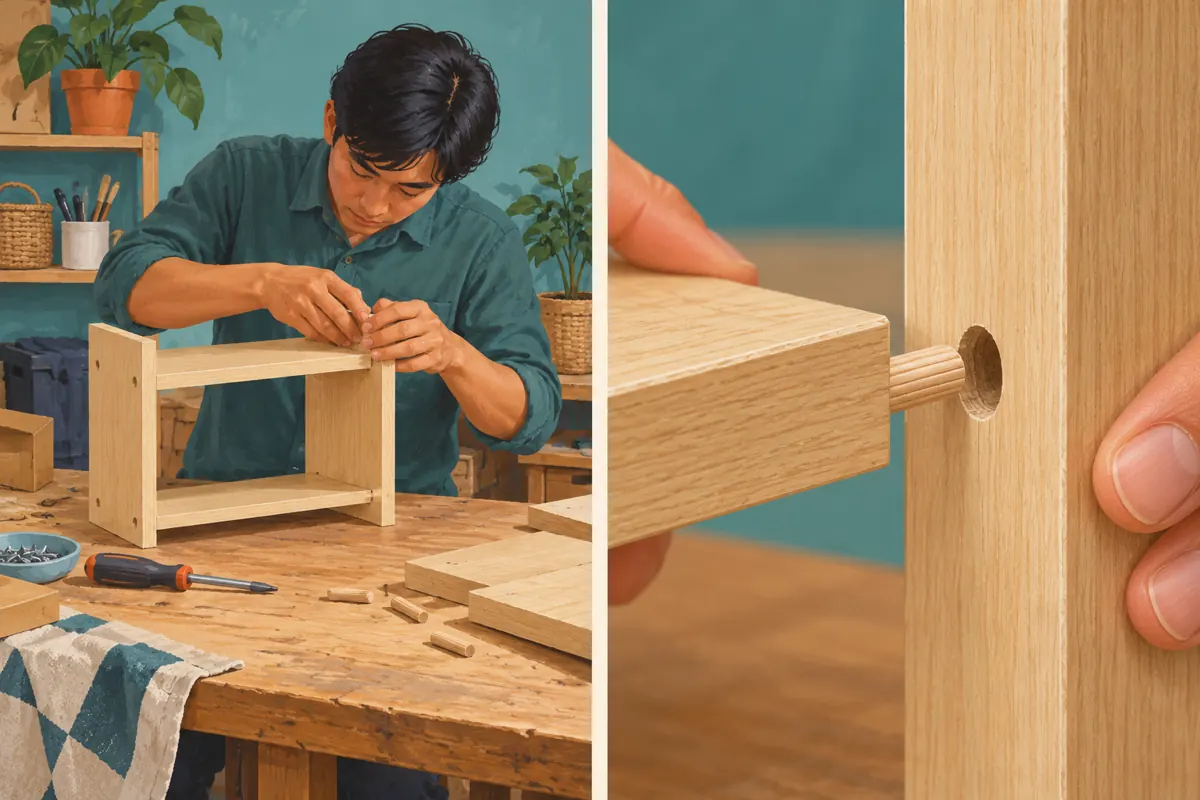
Choose the most consequential uncertainty and write a filming instruction that another staff member could follow. For example: keep the panel in the same orientation, show the locating hole before insertion, and hold the completed joint in view before cutting away. That is more actionable than asking the editor to make the demonstration more engaging.
Keep a brief record of the original problem, the revision and the reason for choosing it. Preserve the source footage so the team can revisit the sequence. If several changes are necessary for accuracy, make them, but record them together instead of later attributing the outcome to one isolated adjustment.
When reviewing the next upload, consider differences in model complexity, video length and how people found it. Two public uploads are not a controlled experiment. Use their results to inform the next practical decision, not to announce a proven formula.
8. Keep SMM panel services outside the comprehension test
The supplied moha-smm.com catalogue includes the exact public name “YouTube Like ~ Max 50k ~ 50k/days ~ Instant ~ 𝐍𝐎 𝗥𝗘𝗙𝗜𝗟𝗟”. Its description field is empty. The title identifies a likes offering, but it does not establish how delivery works, who participates or whether any viewer understood your demonstration. Treat the quantities and timing language as catalogue wording, not verified performance.
YouTube's Fake engagement policy prohibits artificial inflation of views, likes and other metrics. It also states that a hired promoter's actions can affect the channel. Do not purchase artificial engagement to make a review sample appear stronger or to suggest customer approval.
Purchased engagement is not evidence of genuine interest, sales, ad delivery or Cambodian users. If earlier panel activity exists, note its dates as context and acknowledge the uncertainty. Do not assume you can identify or subtract its effects precisely from the retention report.
9. Promote the revised explanation to the people it helps
Once the demonstration is accurate and understandable, share it where the corresponding question arises. Staff could send the relevant public video to a customer asking about assembly, include it in appropriate product information, or share it with a community that permits such posts. Describe the model and the problem answered so people can decide whether to watch.
For a Cambodian shop serving both Phnom Penh collection customers and provincial deliveries, make the distinction between assembly guidance and fulfilment information explicit. A useful connector demonstration does not establish delivery coverage, current stock or installation availability. Confirm those details separately when responding to an enquiry.
Ask for a specific response: which step still needs a closer view? Avoid requesting praise as a condition of receiving help. A clear question about an unresolved step can guide the next recording more effectively than a general request for engagement.
10. Review business usefulness alongside viewing behaviour
Keep a small, anonymised question log beside the filming notes. Record the model, the assembly issue and whether the customer needed further explanation after receiving the video. Do not paste private conversations, addresses or payment details into an editorial worksheet. The purpose is to recognise recurring instructional problems.
Distinguish an assembly question from a purchase enquiry and a confirmed order. Someone asking how to fit a connector may already own the product. Someone watching the full demonstration may be researching a different shelf. These are reasons to avoid treating viewing behaviour as a sales report.
At the next review, decide whether to keep the demonstration, reshoot one passage or create a separate troubleshooting video. If the same question persists, inspect the instruction again. If different questions emerge, investigate whether the new video exposed a useful next topic rather than declaring the campaign unsuccessful.

Frequently asked questions
What should a small shop do when there is too little retention information?
Begin with direct review of the footage and a colleague's comprehension check. Inspect whether the product is identifiable, the relevant parts remain visible and the spoken explanation matches the action. Record what remains uncertain and revisit analytics later. Purchasing engagement would not answer whether the instructions are understandable.
Should we remove an unpacking sequence if people seem to skip it?
First decide whom it serves. Customers checking carton contents may need it, while customers already assembling the shelf may want the next step. Consider a separate unpacking explanation or a clearer transition. Keep essential information available instead of deleting it solely to produce a smoother-looking report.
Can a better retention pattern show that Cambodian customers prefer this model?
No. It does not establish location, buying intent or a product preference. The demonstration could be clearer, the audience could differ, or viewers could be solving an existing ownership problem. Ask customers about their requirements and keep verified enquiries and orders in a separate business record.
Does a spike mean the joint demonstration is our strongest selling point?
Treat it as a passage to investigate. Watch what happens there, inspect the visibility of the components and ask someone to explain the instruction back. Even a clearly useful passage does not establish that the joint influenced a buying decision. That requires different evidence.
How should we brief an outside editor or promotion provider?
Give them the exact model, customer task, approved footage and unresolved instructional question. Ask for a concrete revision and a description of any proposed distribution method. Make clear that artificial engagement is unacceptable. Review the finished demonstration for accuracy before authorising its use in promotion.
Explore the current service catalogue, create an account, or ask a specific question through support tickets.
Prepared with AI assistance. Illustrations explain the workflow and do not represent customer results.