19/10/2026 11:41
TikTok Promote or Panel Likes? A Local Enquiry Workflow for Cambodian Upholstery Shops

An upholstery video can attract attention without helping a shop decide which chairs it can repair. A viewer may enjoy a fabric transformation while living outside the collection area, wanting a different service or having no repair project at all. For Cambodian businesses comparing TikTok promotion with SMM panel services, the practical question is therefore specific: which approach can support relevant enquiries, and what evidence will show that? This guide follows a hypothetical Phnom Penh upholstery workshop preparing a chair-recovering campaign. It explains how to assess TikTok Promote where available, build a useful enquiry route and judge the result without treating purchased engagement as customer demand.
1. Define the enquiry before choosing the promotion
In this hypothetical example, the workshop wants enquiries about recovering dining chairs within an area it can realistically serve. A useful enquiry includes the furniture type, its condition, the approximate location and permission to continue the conversation. It is still an enquiry, not an accepted quotation or a paid job. Writing this definition first prevents the team from calling every notification a business result.
Choose one service the workshop currently has capacity to deliver. Avoid promoting an entire catalogue of sofa repairs, curtains, mattresses and custom furniture in the same first test. A narrower offer makes it easier to explain what information the customer should send and why the workshop needs it. Assign someone to answer those messages during stated working hours, and decide how enquiries arriving after closing will be handled.
2. Understand what Promote and panel engagement represent
TikTok describes Promote as an advertising tool that increases content visibility. A panel listing for likes or followers represents a different service category; its presence in a catalogue does not establish that TikTok advertising will run. Neither purchased engagement nor an advertising click proves genuine interest, a sale or that a person is Cambodian.
For example, the supplied public catalogue includes the exact title “TikTok - Likes ~ Bot Profiles ~ Max 5M ~ 100k/Days ~ Instant ~ 𝐍𝐎 𝗥𝗘𝗙𝗜𝗟𝗟”. It is presented as a likes service, but no supporting description was supplied. Treat the wording as a listing title, not independently verified delivery evidence. It provides no basis for assuming local upholstery prospects, advertising placement or official TikTok affiliation.
TikTok’s Community Guidelines prohibit services that artificially increase engagement or manipulate its recommendation system. For this workshop’s enquiry objective, artificial likes are therefore an unsuitable route. Readers evaluating an SMM panel should apply this policy check before considering price or quantity.
3. Check whether the advertising route is usable
TikTok’s eligibility guidance says Promote users must be at least 18 and have an eligible creator or Business Account. Promoted content must be public and use original sound or audio permitted for commercial use. TikTok also requires its commercial content disclosure setting when promoting a business. Review these requirements against the actual post before allocating money.
Open the account’s available promotion controls and examine the objectives and audience choices offered. This article does not establish that every Promote option is available to every Cambodian account. Do not assume that a tutorial recorded elsewhere matches your screen, or that a location setting offers neighbourhood precision. If the available controls cannot reasonably support the workshop’s service area, stop this route and continue with useful organic content while evaluating another legitimate advertising option.
Keep a short decision note: available objective, usable audience settings and any unresolved eligibility issue. That note should explain why the team proceeded or deferred.
4. Film a demonstration that helps customers qualify themselves
For the hypothetical workshop, a useful video would show one dining chair, a close view of the worn covering and the range of work being discussed. Explain whether the shop is demonstrating fabric replacement, padding replacement or a preliminary inspection. These are different jobs. A polished transformation alone can leave viewers assuming that every damaged chair qualifies for the same treatment.
Use Khmer narration if that is how the intended customers prefer to communicate, with clear supporting captions. State the service area and explain that an estimate depends on condition and material choice. If structural repair is outside the offer, say so plainly. Finish with one action: visit the service page to learn what photos and details to send.
Use footage of work the shop is entitled to show. Keep customer addresses and documents outside the frame. Do not stage reactions, invent testimonials or describe a demonstration chair as proof of a typical customer outcome.
5. Prepare a page that answers the next question
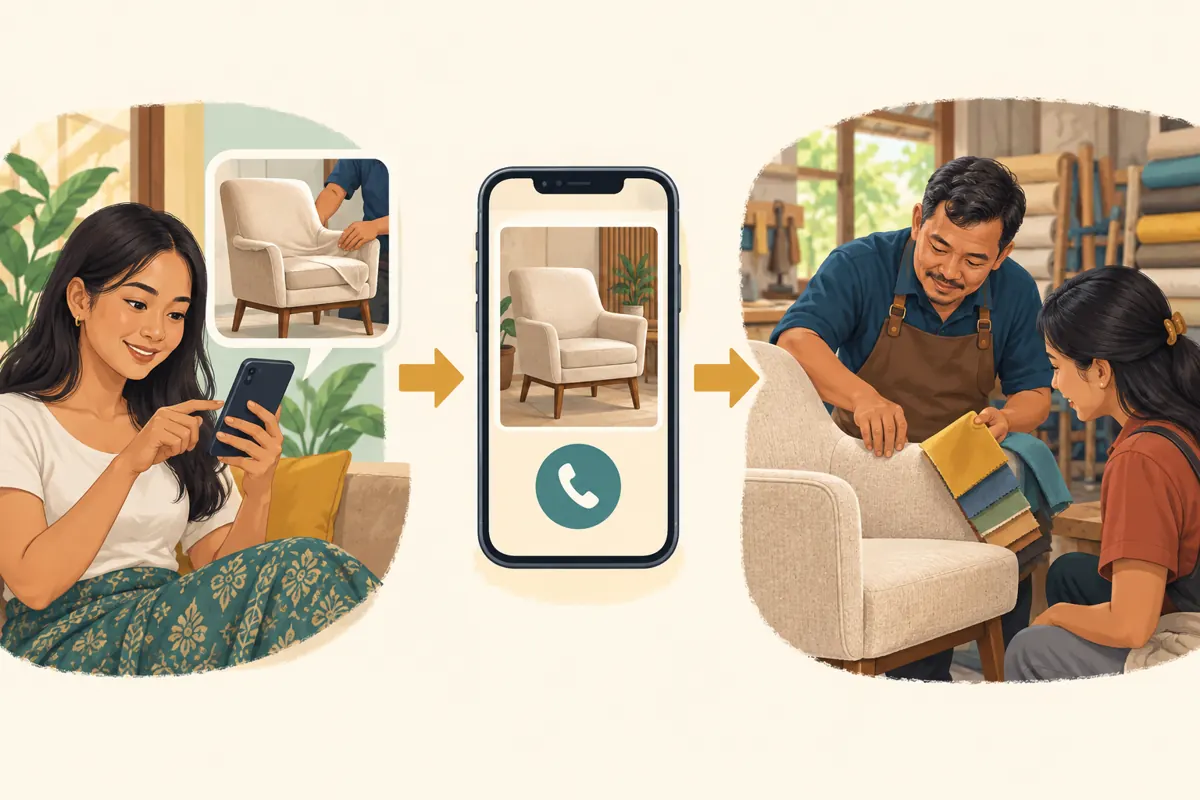
The destination should explain the service shown in the video immediately. For this example, that means chair recovering, the collection or drop-off arrangements, and the information needed for an initial discussion. A homepage containing unrelated furniture offers makes visitors search again. A focused page reduces that extra work without promising that more visitors will become customers.
Ask initially for a clear furniture photo, the number of pieces, a general area and the work requested. Avoid demanding a full residential address before deciding whether the job is suitable. Explain when staff normally reply and whether an inspection is needed before confirming a price. Give customers a contact method the team actually monitors.
Test the page on a phone using an ordinary mobile connection. Open the contact button, submit a clearly marked test enquiry and confirm that it reaches the responsible person. Check Khmer readability, image loading and whether the customer can return to the service details after opening the contact route.
6. Select the objective that matches the prepared route
TikTok’s official website-promotion instructions describe choosing Get sales, then More website visits, entering the destination URL, selecting a call to action and choosing the creative. The documented workflow then includes audience, budget and duration choices before reviewing and paying. Follow the current controls available in your account rather than assuming their layout will remain identical.
Website visits and website conversions are separate objectives. TikTok says the conversion option requires integration with TikTok Ads Manager and installation of TikTok Pixel; those requirements do not apply to the website-visits objective. Do not select conversions merely because the word sounds closer to revenue. Measurement setup needs its own deliberate implementation and verification.
For the hypothetical workshop, website visits is a possible starting point if its purpose is to send people to a working service page. The shop must still assess enquiries separately. If it lacks a usable destination, prepare that route before spending.
7. Set a spending boundary and an operational review point
Decide what the business can afford to spend on learning, even if the campaign produces no suitable enquiries. This is a management decision based on available funds and workload, not an assumed market rate. Review the actual payable amount, currency and duration shown before confirming. Do not copy another shop’s budget or treat an estimated result as a commitment.
Write down the chosen audience options and compare them with the service boundary. Naming Phnom Penh in a caption helps explain the offer, but it does not prove that delivery is geographically restricted. Avoid promising customers collection from locations the workshop cannot serve economically.
Schedule a review when someone can inspect both the promotion and the enquiry inbox. Define reasons to pause early, such as a broken contact route, incorrect service information or an unanswered message backlog. A modest campaign can still create operational problems if nobody owns the next step.
8. Keep advertising activity and customer progress separate
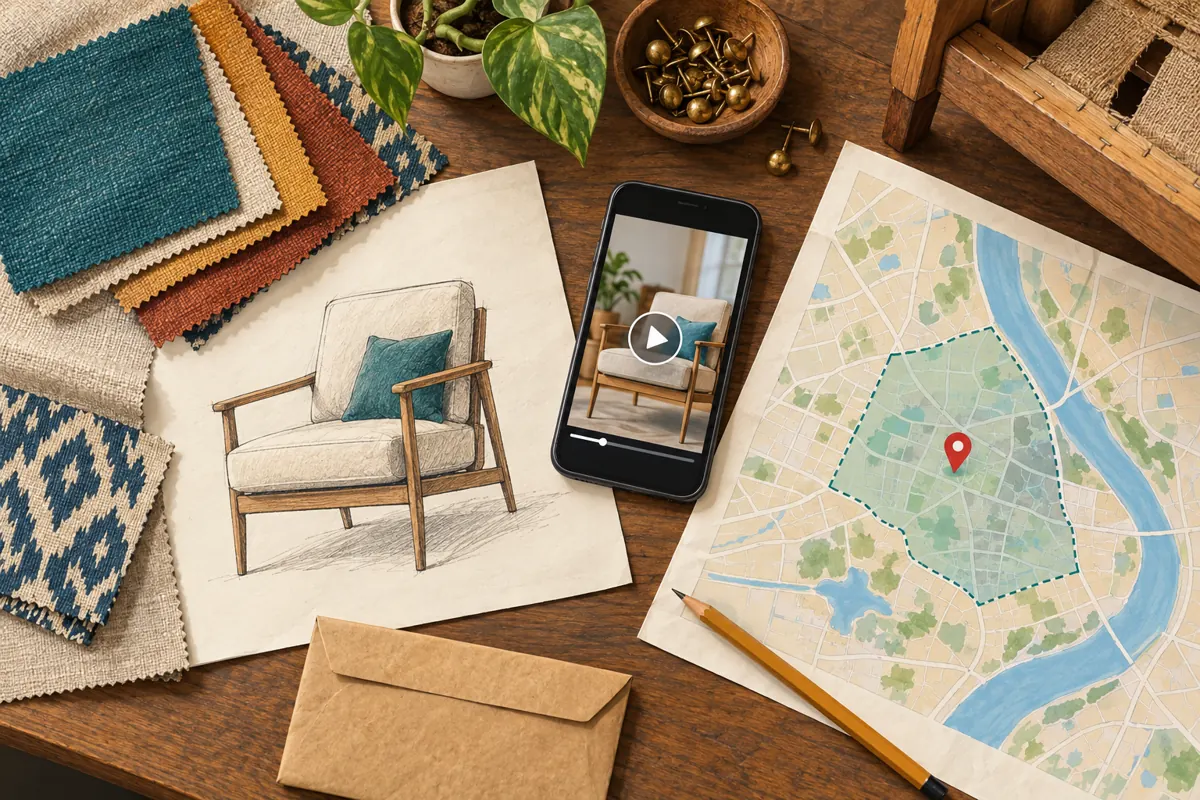
TikTok’s Promote dashboard reports campaign information such as spending, status and engagement activity. Use those records to understand advertising delivery. Keep a separate enquiry log for whether someone supplied usable furniture details, falls within the service area, received an estimate or booked an inspection. Never relabel website clicks as quotation requests.
A simple log can record the enquiry date, source if known, furniture category, general location, next action and outcome. Use a reference number instead of copying private customer conversations into a widely shared report. Count repeat messages about the same job as one enquiry. If the source is uncertain, record it as unknown rather than assigning it to the campaign.
Ask customers how they found the workshop when appropriate, while recognising that memory is imperfect. Someone may see a video, discuss it with a relative and contact the shop later through another channel. Attribution can be incomplete without making the enquiry itself invalid.
9. Diagnose the gap before changing the campaign
Different patterns suggest different questions. If the promotion reports visits but the shop receives no enquiries, inspect the destination and contact process first. If enquiries repeatedly come from outside the service area, reconsider audience options and how prominently the geographic boundary appears. If suitable prospects abandon the discussion after receiving basic information, examine expectations about materials, inspection and turnaround.
These patterns are clues, not proof of a single cause. A small set of enquiries may be unrepresentative, and campaign activity can overlap with referrals or ordinary posting. Avoid declaring a creative ineffective solely because immediate sales did not appear, especially when customers need time to arrange transport or compare fabrics.
Change one major element at a time where practical. For example, clarify collection arrangements while keeping the underlying service offer stable. Record the change date so the next review can distinguish earlier enquiries from later ones.
10. Decide whether to continue, revise or stop
Continue only when the business understands what it is buying, can handle the response and sees enough relevant evidence to justify another bounded test. Revise when the enquiry route works but recurring misunderstandings reveal a fixable communication problem. Stop when the available audience controls are unsuitable, the service is unavailable or the workshop cannot respond reliably.
Common mistakes include choosing a follower objective for an immediate quotation task, sending traffic to an unfinished page, changing the offer halfway through without noting it, and counting all incoming messages as new prospects. Another mistake is buying engagement to make a weak campaign appear successful. That obscures the evidence the owner needs.
The hypothetical workshop’s review should end with a concrete decision and its reason: retain the chair demonstration, clarify collection coverage, improve the enquiry page or pause paid promotion. A useful decision can be made even when the test does not justify further spending.

Frequently asked questions
Can panel likes help TikTok Promote find Cambodian upholstery customers?
Do not assume that they can. A panel likes listing supplies no evidence that its engagement represents Cambodian residents, furniture owners or purchase intent. Artificial engagement also conflicts with TikTok’s rules. Base audience decisions on the advertising controls actually available and assess customer relevance through genuine enquiries.
Should a small workshop choose website visits or website conversions?
Choose according to the route and measurement setup you can support. Website visits can direct people to a prepared service page. Website conversions require the integrations described in TikTok’s documentation. Neither label guarantees quotations or sales, and an untested conversion setup should not be treated as reliable business measurement.
What if Promote does not offer the location options the shop needs?
Do not substitute an assumed setting or claim local targeting you cannot verify. Explain the service area clearly in organic content and investigate another legitimate promotion route with suitable controls. Broader advertising is only a business choice if the shop accepts that some attention may come from people it cannot serve.
How can the shop judge results without publishing customer information?
Summarise enquiry categories and progress using internal references. Staff can report whether a request concerned the advertised service and whether an inspection was arranged without sharing names, addresses or screenshots. Keep the detailed customer conversation accessible only to the people handling the job.
Explore the current service catalogue, create an account, or ask a specific question through support tickets.
- TikTok Help Center: Use Promote to grow your TikTok audience
- TikTok Business Help Center: How to set up Promote for website visits and conversions
- TikTok Community Guidelines: Overview, commercial disclosure and deceptive engagement
Prepared with AI assistance. Illustrations explain the workflow and do not represent customer results.