22/10/2026 04:54
Can Buyers Find the Right Shop? Telegram Username Checks for Cambodian Packaging Suppliers

A useful packaging demonstration can still lose a buyer at the contact step. Someone sees the paper bag they need, searches the shop name, and finds several similar profiles. Another person opens a catalogue when they expected to ask about quantities. For Cambodian packaging suppliers promoting takeaway boxes, bags or wrapping materials, the public contact deserves the same attention as the product photograph. This workflow explains how to choose a clear Telegram username, test the destination and maintain it across promotional materials. It also shows where an SMM panel service fits into the review—and why a larger member count cannot establish that buyers reached the right business.
1. Start with the action the buyer needs
Before choosing a username, finish this sentence: after seeing this promotion, the buyer should be able to do what? A café owner comparing takeaway boxes may need to send a lid photograph. A market seller browsing paper bags may simply want to inspect the range. These are different tasks, even when the same shop handles both. Write the intended action next to the proposed contact destination.
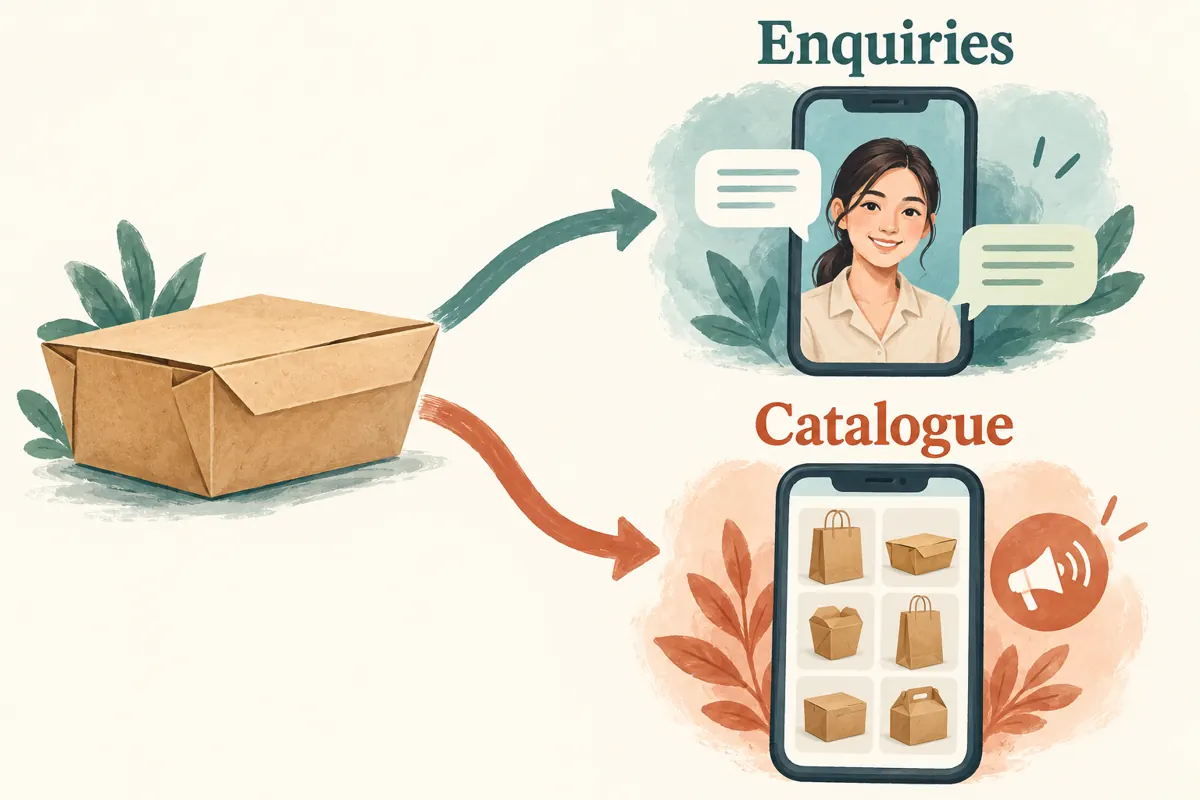
In a hypothetical Phnom Penh packaging shop, the owner maintains a product catalogue and a separate account for enquiries. A post about matching a replacement lid should lead to the enquiry account, with instructions to send the container reference. A general collection post can lead to the catalogue. Label these destinations by purpose. Avoid placing two unexplained handles beneath every photograph and expecting visitors to work out which one answers questions.
2. Separate the readable shop name from the exact username
Telegram documents that public usernames support discovery through global search and that username links let people contact an account without knowing its phone number. Usernames accept Latin letters, digits and underscores; capitalization does not create a different username. These details matter when preparing contact artwork. [Telegram username guidance](https://telegram.org/faq#usernames-and-t-me)
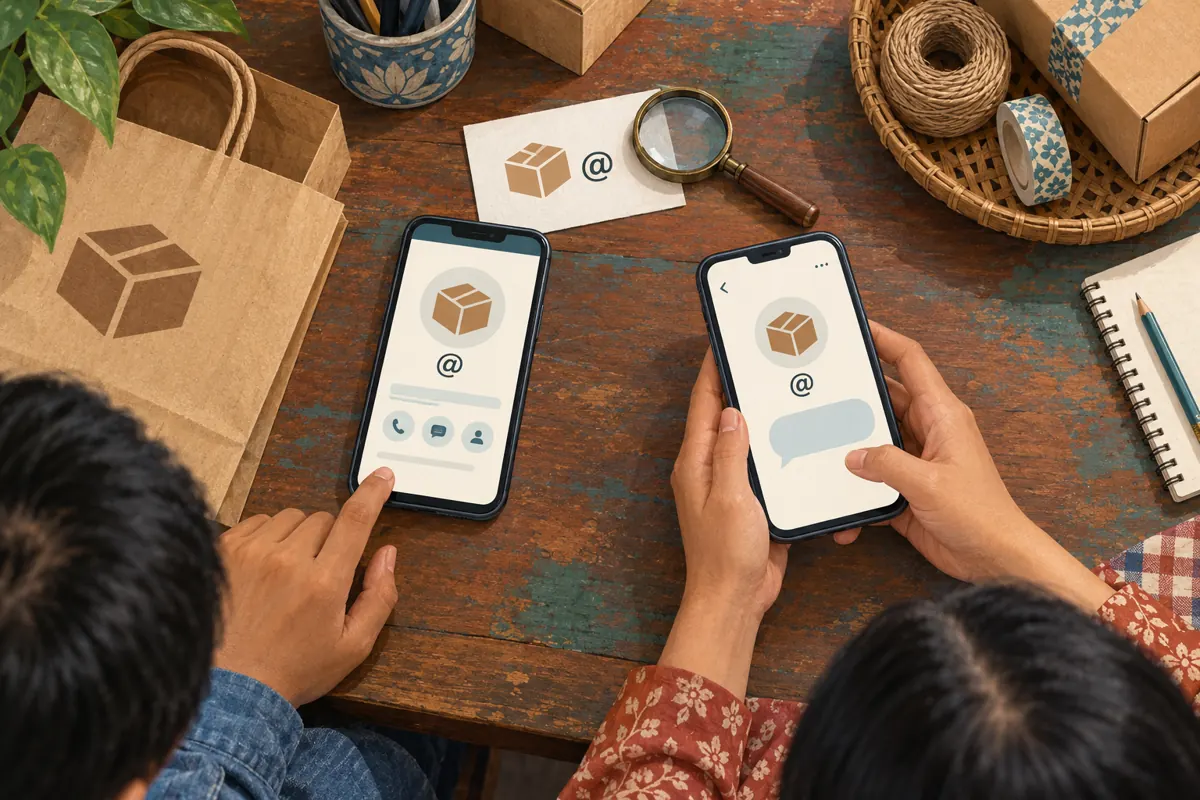
For a Cambodian audience, keep the familiar Khmer shop name prominent in the surrounding promotion while presenting the exact handle separately. Agree on one Latin spelling within the team. Do not let the designer, salesperson and delivery coordinator each invent a different transliteration. A handle should remain easy to distinguish when copied from a small image or read aloud.
Avoid using a decorative font for the handle. Put it on its own line, away from punctuation that could be mistaken for part of it. Ask a colleague to transcribe it from the finished artwork without referring to the original draft. This catches ambiguity that copying and pasting the approved spelling would miss.
3. Choose for recognition and continuity
Shortness is useful, but recognition matters more than removing every character. Consider a stable shop identifier with a meaningful product or location term if needed. Avoid a seasonal offer, temporary warehouse name or employee nickname that will soon become inaccurate. Do not assume that adding a Cambodian place name verifies local ownership or improves search placement.
Use a simple decision process: can staff explain the spelling, can a new buyer distinguish it from similar names, and will it still describe the business next year? If the answer to any question is no, revise the candidate before distributing it. Check availability in the relevant Telegram account rather than assuming an unused-looking name is available.
Record who is responsible for maintaining the published contact. The person arranging promotion should know whom to notify when the profile becomes inaccessible or enquiries stop being answered. Keep this responsibility clear even when a family business shares its daily sales work.
4. Make the destination recognizable without relying on popularity
Opening the correct contact should feel consistent with the promotion. Use a recognizable shop image and a concise explanation of what the business supplies. Mention the relevant location or collection arrangement accurately. A visitor looking for food containers should not have to infer the business from an unrelated personal photograph and an empty description.
In the hypothetical shop, the promotional image shows kraft bags while the contact profile still describes gift wrapping only. The handle may be correct, but the mismatch introduces doubt. Update the description to reflect the actual range before sending more visitors there. Use only information the shop can substantiate; a professional-looking profile does not require invented credentials.
Treat matching imagery as a recognition aid, not proof of ownership. The stronger practical reference is a contact published consistently through business materials the customer already trusts. Do not use a large audience count as a substitute for checking the exact destination.
5. Review what a new visitor can see
A public contact creates an opportunity for enquiries, so review the information exposed alongside it. Telegram says number visibility depends on privacy settings and provides controls under Settings, Privacy and Security, Phone Number. People who already know and saved the number can still see it. [Telegram phone-number guidance](https://telegram.org/faq#q-who-can-see-my-phone-number)
Have the account owner inspect the profile photograph, description and contact details before the campaign. Decide which details are appropriate for prospective customers. Keep a personal home address out of promotional screenshots unless it is deliberately the public business location. This is especially relevant when an owner originally used the account for family conversations.
Test with a consenting colleague whose account has not saved the shop number, where possible. Record what that tester actually sees rather than assuming every visitor sees the owner's view. The test should use a harmless sample enquiry, without customer names, delivery addresses or payment records.
6. Test the journey from the finished promotion
Start with the exported artwork or draft post that buyers will encounter. Open its contact link, inspect the destination and send a clearly marked test question. Then confirm that the staff member responsible for enquiries receives it. Testing only the username inside the owner's profile skips the copying and layout mistakes introduced during production.
Also test the manual route. Ask the colleague to read the handle from the image and search for it without help. Note any hesitation over spelling, repeated underscores or similar characters. The purpose is to find friction before promotion, not to demonstrate that a familiar staff member can eventually reach the shop.
For the hypothetical packaging supplier, use a realistic test: ask whether a photographed container has a matching lid and whether the shop needs its size reference. The receiving staff member should recognize this as an enquiry and know what information to request next. A technically working contact with no response process is only partly ready.
7. Give the first message enough product context
The public username gets a visitor to the shop; the promotion should explain what to send after arrival. For packaging products, useful details might include a product reference, dimensions, intended use and required quantity. Ask for only the details needed to begin the conversation. Avoid making an initial enquiry feel like a lengthy application.
A hypothetical caption could ask buyers to send the bag reference and the dimensions of the item they want to pack. Staff can then clarify handle style or material before discussing availability. If customers commonly use Khmer product names, have the sales team review the wording for the terms they actually hear.
Prepare an internal response note for ambiguous requests. When a buyer asks for the same box as before, staff should request a photograph or previous product reference rather than guessing. Keep quotation, stock confirmation and order acceptance explicit; opening a chat does not complete any of those steps.
8. Keep panel service targets separate from enquiry contacts
The supplied public catalogue includes the exact service name “Telegram Members ~ Max 1M ~ 50k/days ~ Instant ~ 𝐍𝐎 𝗥𝗘𝗙𝗜𝗟𝗟”. Its title identifies a member-related offering, but the supplied description is empty. The title alone is insufficient to establish eligible destinations, delivery conditions or audience characteristics. Treat its speed and quantity wording as catalogue claims requiring confirmation, not independently verified facts.
An enquiry account and a member-bearing destination serve different purposes. Do not paste the sales contact into a service request simply because it is the Telegram link used most often. If considering a panel order, first establish the service's accepted target and current terms. If the available information cannot resolve that question, leave the request unsubmitted.
Purchased engagement is not evidence of genuine interest, sales, ad delivery or Cambodian users. A member-related service cannot fix an incorrect handle or prove that enquiries reach staff. Keep any panel delivery record separate from customer conversations, quotation requests and completed orders.
9. Treat a username change as a contact-material update
Before changing a public contact, list every place the old one appears: social captions, product photographs, printed catalogues, counter signs and reusable design templates. Include material held by partners who share the shop's offers. A change is unfinished while active promotional items still direct buyers elsewhere or leave them uncertain.
Prepare the replacement wording and assign responsibility for each update. After the change, open the new contact from each important placement. Do not assume old links redirect correctly. Where a contact is embedded in an image, editing the accompanying caption may not resolve the conflicting instruction inside the artwork.
Use a correction message that states the current contact and its purpose clearly. For printed stock that cannot immediately be replaced, decide whether a legible correction label is sufficient or distribution should pause. Recheck recurring promotional templates before reuse; otherwise, an old handle can return months after the original correction.
10. Diagnose confusion before increasing promotion
Common mistakes include judging success from an account's appearance, changing several contact details simultaneously, and treating every new message as a qualified buyer. Maintain a small issue log with the promotional placement, problem observed and correction made. Record categories such as wrong destination, unclear spelling, missing product reference or unanswered enquiry.
If buyers repeatedly ask whether they have reached the packaging shop, strengthen the identity cues. If they arrive correctly but cannot describe the product, improve the caption's enquiry instructions. If enquiries are clear but replies are delayed, address staffing before increasing exposure. Each problem calls for a different correction.
Do not turn username research into unsolicited prospecting. Telegram warns that unwanted private messages and unsolicited advertising can lead to account restrictions. Use public contact details to receive expected enquiries, and seek permission before sending promotional follow-ups. [Telegram Spam FAQ](https://telegram.org/faq_spam)
Frequently asked questions
Should the shop put a Telegram handle directly on every product image?
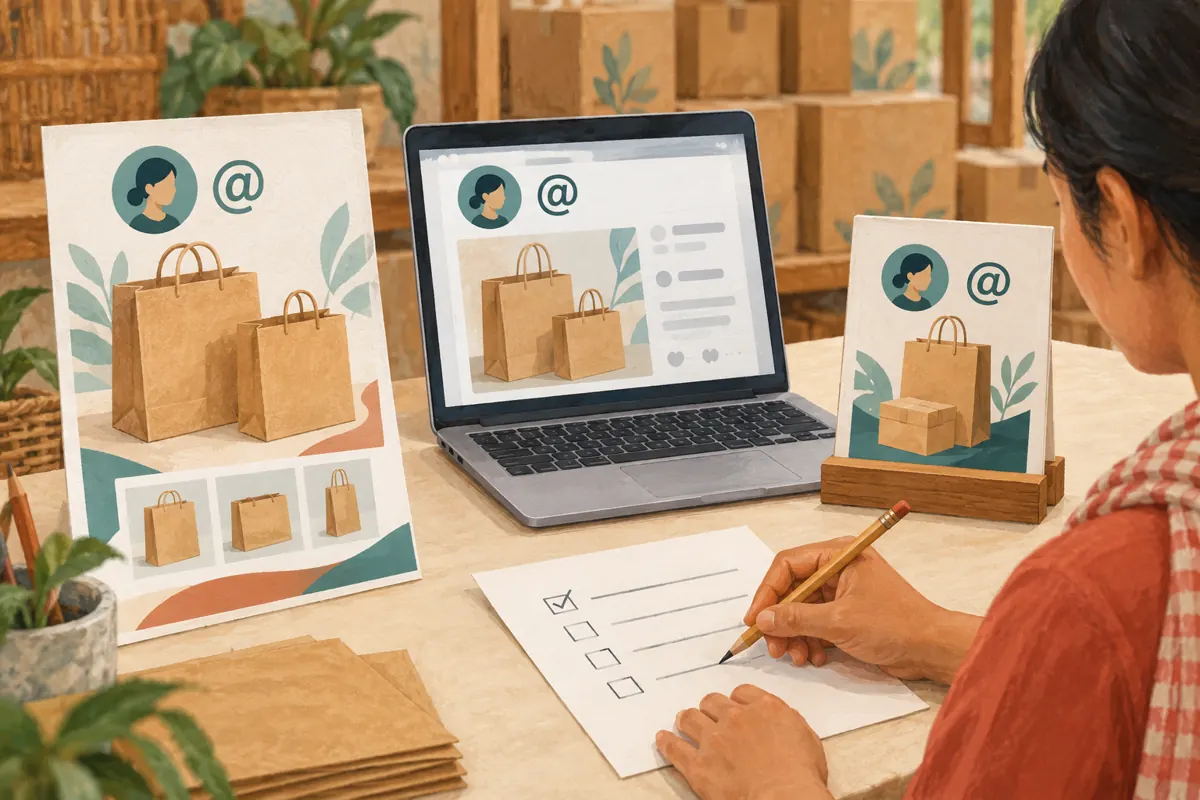
It can help when images circulate separately from their captions, but it also creates more material to maintain. Use a stable contact, keep it readable and retain an editable original. For frequently changing contacts, consider whether the image should instead direct people to a maintained business information page.
What if customers recognize the Khmer shop name but struggle with the Latin handle?
Keep the familiar shop name beside the handle and provide a clickable contact wherever the publishing format allows it. Ask someone outside the design process to copy the handle from the image. If they struggle, simplify the spelling or improve typography before distributing more material.
Does a successful test message prove the promotion will generate sales?
No. It establishes that a particular contact journey worked during the test. Sales also depend on product suitability, availability, pricing, response quality and other factors. Record genuine enquiries and their outcomes separately, without presenting a contact check as evidence of commercial performance.
Can a panel member increase make the shop look verified?
A member count does not verify ownership, location or product quality. Never describe purchased membership as customer endorsement. Help buyers recognize the business through consistent contact details and accurate information, and confirm the exact destination independently of its visible audience size.
What should staff do when a buyer reports a similar-looking contact?
Ask which public handle or promotional item caused the confusion, without requesting private chat histories unnecessarily. Compare it with the approved contact record and correct any material the shop controls. Give the buyer the current contact through an established business channel; avoid making accusations before checking the facts.
Explore the current service catalogue, create an account, or ask a specific question through support tickets.
Prepared with AI assistance. Illustrations explain the workflow and do not represent customer results.