22/10/2026 01:42
Wall Bracket or Ceiling Clip? YouTube Image Quizzes for Cambodian Curtain-Track Shops

A customer can recognise a curtain colour while still ordering the wrong fitting. For a Cambodian curtain-track shop, that makes product identification a useful subject for social media promotion. A short YouTube image quiz can help viewers distinguish two samples before they contact the shop. The practical question is how to teach that distinction without implying that a correct answer confirms compatibility or that participation proves demand. This workflow follows a hypothetical Phnom Penh shop preparing a wall-bracket-versus-ceiling-clip quiz. It covers the question, photographs, answer explanation, follow-up demonstration and enquiry handover, including where SMM-panel metrics would fail to answer the business question.
1. Choose a confusion that staff can actually resolve
Start with a recurring misunderstanding at the counter. In this hypothetical shop, customers send a photograph of a track but call every supporting component a bracket. Staff then need another conversation to establish whether the customer means the wall support, the ceiling clip or another fitting. The quiz should teach recognition of the shop’s two specific samples, giving future enquiries a clearer starting point.
Write an internal objective before drafting the post: help viewers identify the wall-mount sample in this particular range. Avoid objectives such as increasing excitement or making the channel look popular, because neither tells the photographer what to show. Ask the employee who checks product compatibility to approve the distinction. If the two samples have multiple approved uses, choose a different pair or narrow the question until there is only one defensible answer.
2. Decide whether the question belongs in a quiz
A quiz suits a question with a correct answer. A preference question, such as which curtain finish viewers like, belongs in a poll. Mixing these purposes creates misleading feedback: choosing an attractive product does not mean recognising its function. For this exercise, use a question such as: Which sample is the wall-mount support in the range shown? Keep the wording tied to the actual samples.
Do not ask which fitting is best for someone’s home. That depends on information the image does not establish, including the track system and mounting surface. Likewise, avoid questions about load capacity unless reliable product documentation supports the answer and the question includes its conditions. A narrow identification exercise is easier to explain honestly than an installation recommendation disguised as a game. It also leaves staff room to assess a customer’s particular request later.
3. Photograph the distinguishing feature fairly
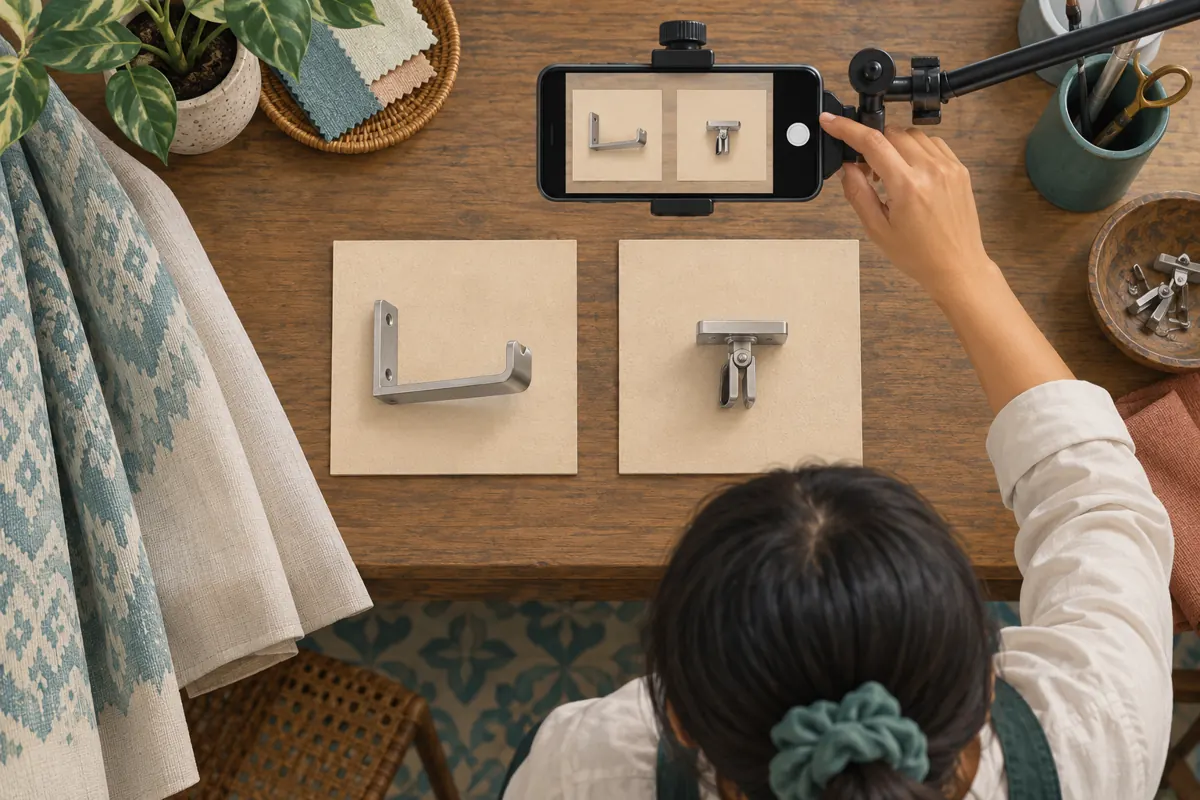
Use photographs of the products the shop actually stocks for the customer-facing quiz. Place both samples against the same plain background, with similar lighting and enough space around their edges. Show the feature needed to answer: for example, the sample’s mounting face or its attachment shape. Do not make the correct option brighter, larger or more polished than the alternative.
Check whether the viewing angle hides a crucial hole, flange or clip. A photograph taken directly from above may flatten a shape that becomes obvious from a slight angle. Photograph again if necessary instead of expecting a caption to rescue an unclear image. Keep an uncropped reference photograph with the internal product identifier so staff can confirm which sample was used. The illustrations accompanying this article are conceptual editorial scenes; they are not catalogue photographs or evidence of a fitting’s design.
4. Build the YouTube quiz with a useful explanation
YouTube’s official desktop instructions place quizzes under Create, then Create post. Choose Quiz, enter the question and add the answers, attaching an image where needed. YouTube currently documents up to four answers, with one marked correct. Answer text can contain up to 80 characters, or 30 when an image is added. An optional explanation can contain up to 500 characters. Confirm the available controls in your own channel before preparing the final assets.
Two well-chosen options are enough for this exercise. Use short neutral identifiers such as Sample A and Sample B rather than labels that reveal the answer. Write the explanation before publishing: identify the correct sample, name the visible distinguishing feature, and state that compatibility still needs checking. For the hypothetical range, the explanation might say: Sample A is our wall support; its upright mounting face is the clue. Send your track reference before choosing a fitting.
5. Test comprehension with a colleague on a phone
Show the prepared question and images to a colleague who did not assemble them. Ask what the question means and which visible feature supports their answer. A correct guess is less useful than an explanation. If they choose by colour, image size or background, the presentation may be supplying an accidental clue. If they cannot distinguish the samples, improve the photographs before adding more instructions.
For Cambodian customers, prepare the actual post in the language your audience understands. An English editorial guide does not require an English customer-facing quiz. Have a fluent colleague check Khmer product terminology and the meaning of wall versus ceiling in context. Keep any internal sample code consistent across languages. Review the complete draft on a small screen, including the answer explanation, and remove unnecessary words that make the product images harder to understand.
6. Connect the quiz to a demonstration and an enquiry
Prepare the follow-up before inviting participation. A short demonstration can place the same samples beside their matching track components and point out the distinguishing features. Use the same identifiers as the quiz. Do not introduce a different model without explaining the change, because viewers may remember the silhouette rather than the code. The demonstration should answer the confusion even for someone who never completed the quiz.
Give interested viewers a concrete next step through the shop’s established contact route: send the track reference or a clear photograph of the relevant component, and explain whether the enquiry concerns a wall or ceiling position. Ask for location details privately when needed to assess service coverage. Avoid collecting household information in public comments. Staff should treat the message as an enquiry requiring checks, rather than interpreting a quiz answer as a product selection or an approved order.
7. Evaluate SMM-panel services against the real task
The supplied moha-smm.com catalogue includes the exact public name “YouTube Like ~ Max 100k ~ 50k/days ~ Instant ~ 𝐍𝐎 𝗥𝗘𝗙𝗜𝗟𝗟”. Its description is empty. The title identifies a likes offering, but the brief provides no supporting detail about its method or suitability for a quiz. Treat the speed and quantity wording as catalogue claims, not verified outcomes. Nothing supplied establishes a YouTube quiz-answer service.
YouTube prohibits artificial increases in engagement and warns that a hired promoter’s actions can affect the channel. Do not purchase artificial interactions to support this workflow. Purchased engagement would not establish product understanding, genuine interest, sales, ad delivery or Cambodian users. A panel delivery record could not validate the quiz’s educational value. For this task, direct effort toward accurate photography, clear language and staff follow-up, and decline any proposed service whose mechanism would manufacture the signals you intend to interpret.
8. Read responses as clues, not a market survey
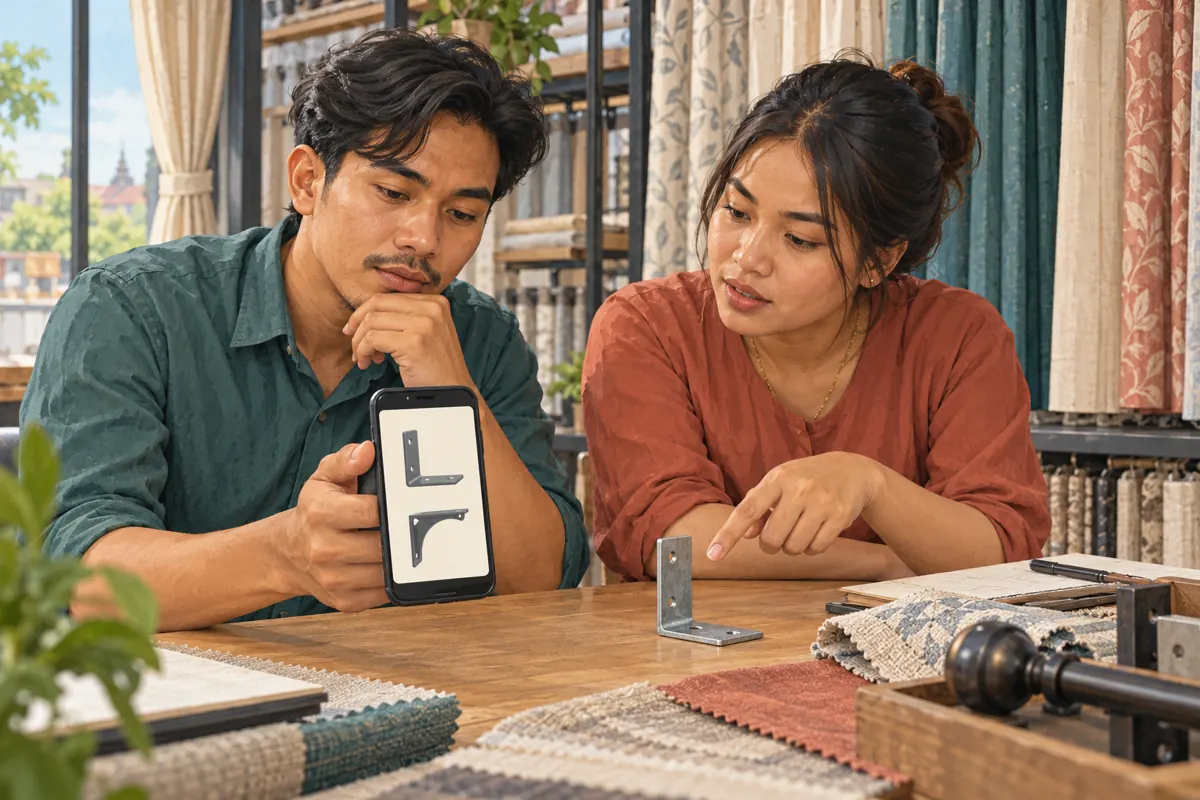
Keep three questions separate during review: could people identify the sample, what remained confusing, and did anyone make a relevant enquiry? Participation alone answers none of them completely. Someone may guess correctly, already know the product, or enjoy quizzes without needing curtains. The people who respond are not necessarily representative of the shop’s service area or its customers.
Record the question, sample photographs and review date alongside a brief summary of substantive comments. In a hypothetical review, viewers might ask whether the ceiling clip fits a different track profile. That suggests a useful compatibility explanation, not proof that the clip will sell. If responses are sparse, report that limitation plainly. Do not manufacture a confident conclusion by combining quiz activity with unrelated video likes. Keep confirmed enquiries and completed orders in their normal business records, with attribution marked unknown when it is unknown.
9. Correct confusing questions without blaming viewers
A common mistake is treating every incorrect response as a viewer knowledge gap. First inspect the question. Did the image hide the attachment point? Could both samples satisfy the wording? Did a translated term change the intended distinction? If the quiz itself is ambiguous, acknowledge that and publish a clearer explanation. Do not use an unreliable result as evidence that customers need a particular product.
Other mistakes include changing sample names between the quiz and demonstration, showing an unavailable variant without saying so, and presenting the majority choice as the technically correct answer. The answer must come from verified product knowledge. Avoid teasing people for choosing incorrectly; the promotional value comes from making the shop easier to ask for help. If a response raises an installation question beyond the post’s scope, explain what information staff need rather than improvising a recommendation in public.
10. Give the exercise a practical finish
Set a review point that matches the shop’s staffing, then complete the promised follow-up. Assign one person to check unanswered questions and another qualified colleague to confirm technical statements where necessary. Keep a small internal note linking the quiz, the matching demonstration and the sample identifiers. This prevents a later staff member from sending an unrelated fitting video simply because its title sounds similar.
Decide the next action from the actual confusion. If viewers recognise the bracket but ask about track compatibility, make that the next explanation. If the pictures were unclear, improve them before repeating the exercise. If nobody asks a useful question, the quiz can still remain a modest educational resource without being labelled a successful sales campaign. A worthwhile outcome is a clearer path from seeing a component to asking an informed question that the shop can answer.

Frequently asked questions
Can we use a quiz to decide which curtain fitting to stock?
An identification quiz is a weak basis for a stock decision because it tests recognition rather than purchase intent. Even a preference poll would leave questions about compatibility, quantities and timing unanswered. Use the quiz to discover what needs explaining, then assess stock using actual enquiries, confirmed requirements and the shop’s normal purchasing process.
What if both samples could be used on a wall?
Rewrite the question or choose a different pair. Do not mark one answer correct merely because staff usually sell it for that purpose. You could ask about a specific documented feature instead, provided the photograph shows it clearly. If the distinction depends on an unseen adaptor, an image quiz may be the wrong format.
Should the answer explanation include a price?
Only if price is necessary and the shop can keep the information accurate. For this identification exercise, an explanation of the visible feature is more useful. Handle a quotation separately after confirming the fitting, quantity and other relevant conditions. A price beside a sample can otherwise be mistaken for the cost of a complete track assembly.
What should we do if Quiz is missing from the channel?
Check YouTube’s current official guidance and the controls available in the account and device you use. Do not buy engagement to try to unlock the feature. The educational idea still works as an ordinary demonstration: show the samples, pose the question verbally and explain the distinction without presenting it as an interactive quiz.
Can a correct response be treated as a qualified sales lead?
No. A correct response does not establish a buying requirement or permission for a sales conversation. A useful enquiry begins when someone voluntarily asks for help and supplies enough relevant context. Even then, staff must confirm compatibility and availability before progressing toward a quotation or order.
Explore the current service catalogue, create an account, or ask a specific question through support tickets.
Prepared with AI assistance. Illustrations explain the workflow and do not represent customer results.