20/10/2026 13:40
Will the Lunch Offer Reach Buyers in Time? Telegram Suggested Posts for Cambodian Food Shops
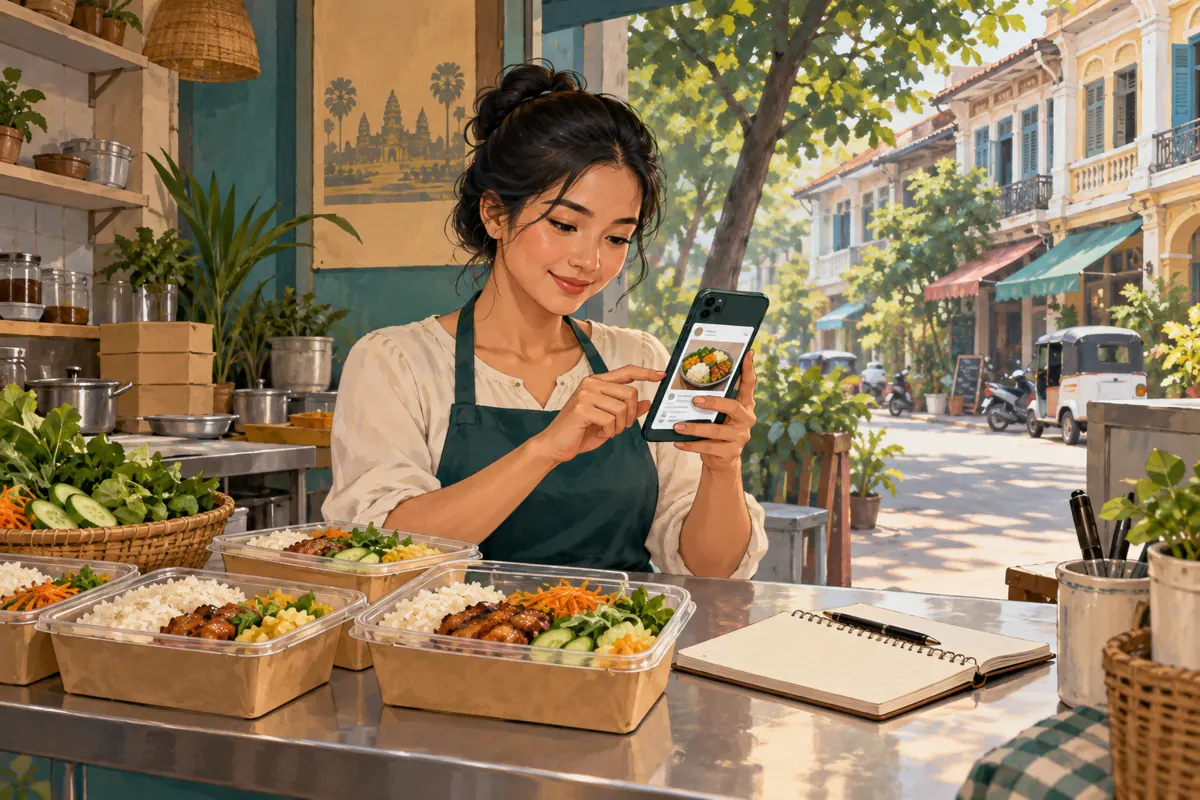
A lunch promotion has a short useful life. Someone might like the meal photograph but discover it after orders close, live outside the delivery area or misunderstand what the box includes. For a Cambodian food shop, arranging a post in another Telegram channel therefore starts with practical questions about location, timing and fulfilment. This guide explains how to prepare a suggested post, review it with a channel owner and assess the enquiries it produces. It also explains why an SMM panel view service cannot establish that a promotion reached suitable local buyers. The running example is a hypothetical Phnom Penh lunch supplier, not a customer case study or a forecast.
1. Define the order you can actually fulfil
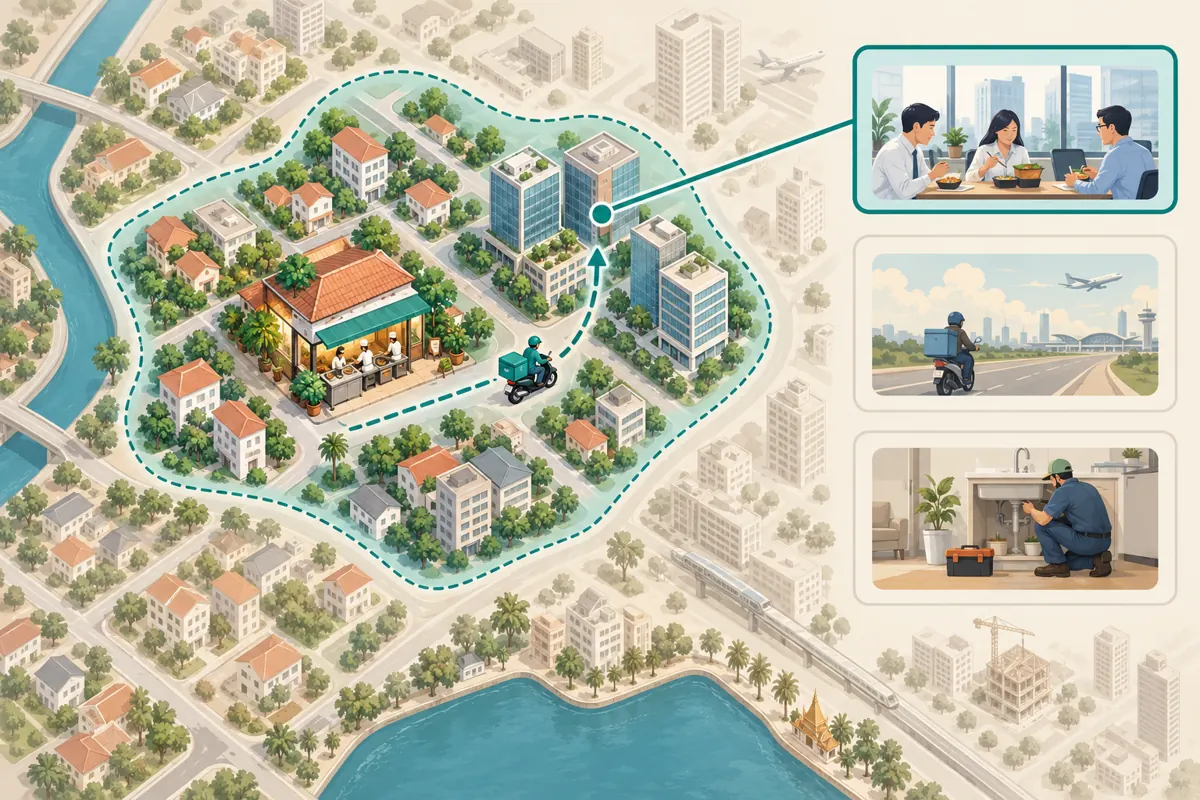
Before choosing a channel, write a short operational brief. Specify the meal, service date, available options, delivery boundary, ordering deadline and contact responsible for replies. Decide whether the promotion seeks individual lunch orders, office group orders or enquiries about future catering. These require different information. A person ordering one box needs a clear total and delivery arrangement; an office organiser may need a quotation and time to collect colleagues’ choices.
In the hypothetical example, the shop wants advance enquiries for weekday office lunches within a manageable Phnom Penh delivery area. Its promotion should invite readers to send their neighbourhood, preferred day and approximate quantity. It should not promise citywide delivery merely to make the offer sound attractive. Agree internally who can confirm capacity and who can approve substitutions. If those decisions remain unresolved, finish them before approaching a channel.
2. Choose a channel by relevance, not its largest number
Review a candidate channel’s recent public posts. Look for a consistent subject, useful local context and a style your offer could fit without confusing readers. A channel discussing nearby office services may be more relevant to this hypothetical supplier than a broad entertainment channel. That is a reason to investigate further, not proof that its subscribers are local employees or likely customers.
Ask the owner what kinds of commercial submissions they accept, which language they expect and whether they can accommodate your publication window. Ask how they describe their audience and what supports that description. Keep unsupported audience claims marked as unverified. Also inspect how previous promotions explain their commercial nature. Avoid a placement that requires your business to impersonate a satisfied customer or turn an advertisement into a supposedly independent recommendation. A suitable partnership should allow an accurate offer in the shop’s own voice.
3. Understand the suggested-post route
Telegram’s official suggested-post announcement describes submissions through channel direct messages. Open the intended channel’s messaging area and use the suggestion icon in the message bar. You can propose a specific publication date and time or leave timing to the owner with Anytime. The owner can propose changes before acceptance; the agreed post can then be published or scheduled. This is a submission and review process, not automatic access to another channel.
Telegram’s separate direct-message guidance explains that owners must enable channel messaging and can set a messaging fee. Check what the app presents before sending. If the required route is absent, ask through an advertised business contact whether submissions are accepted. Do not repeatedly message unrelated administrators. Never give a partner your login code or account access to arrange a post. Your shop needs an agreed publication, not a shared account.
4. Build one self-contained lunch offer
Prepare a draft that remains understandable outside your own channel. Identify the business, describe what the pictured meal includes, state the applicable date and explain where delivery is available. Include the actual price and currency once confirmed, together with any separate delivery charge or conditions. Avoid leaving essential terms in an earlier message that a new reader may never see. Use a real photograph of the offered food, with permission from its creator.
For the hypothetical supplier, the call to action could ask readers to message the shop with their office area, lunch date and quantity for availability confirmation. This is an illustrative instruction, not a completed sales offer. Write the public draft in the language appropriate to the selected channel, with Khmer reviewed by a fluent colleague when needed. If a bilingual version becomes crowded, shorten the explanation without removing price, timing or delivery conditions.
5. Work backwards from the ordering deadline
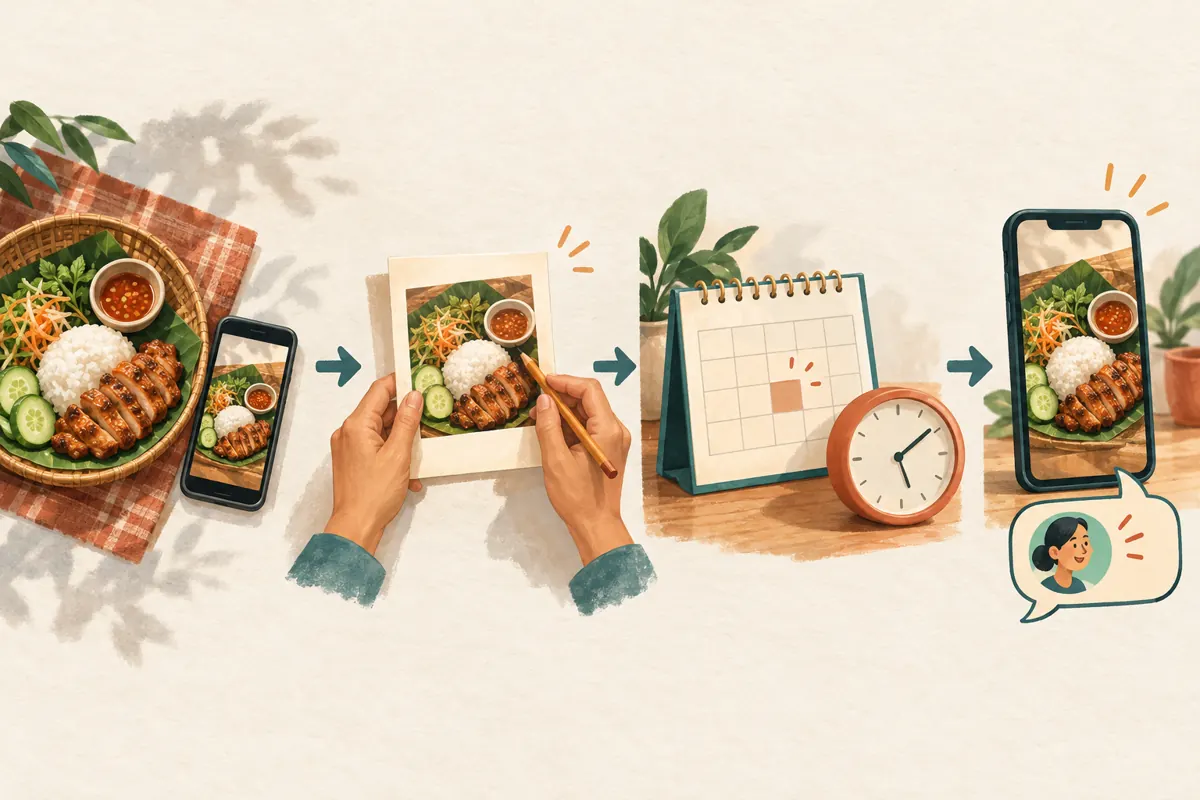
Choose timing from the kitchen’s requirements rather than a general claim about the best posting hour. Allow readers time to see the offer, discuss a group order, ask questions and receive confirmation. Then leave enough preparation time for the kitchen and delivery team. A placement immediately before lunch may be unsuitable for an offer requiring advance coordination, even if the channel is active at that moment.
Write down the proposed publication time, order cutoff and fulfilment date using explicit dates and Cambodia time. Check the scheduled time displayed in your app before approval. For a time-sensitive meal offer, avoid giving the owner unrestricted timing unless the copy genuinely works whenever it appears. Agree what happens if the intended window is missed: postpone the offer, revise its dates or decline that placement. A late post should not quietly retain an expired promise.
6. Review edits as changes to a business promise
Read every revised draft from the buyer’s perspective. A shorter caption might accidentally remove the delivery boundary. A more enthusiastic headline might turn an enquiry invitation into a claim that every order is guaranteed. A replacement photograph might show a drink or side dish that is not included. Compare the final version with the operational brief, especially where an edit changes price, availability, portions or timing.
Assign one person at the shop to approve the final content and another to confirm kitchen capacity when necessary. Record which version was approved and the agreed placement arrangements. Make the commercial relationship clear in the wording where applicable, rather than asking the channel owner to imply personal experience they do not have. Review the destination contact too: a polished post is wasted if its link opens an unattended account or an obsolete menu.
7. Prepare the first reply before publication
The first response should resolve the next decision, not repeat the advertisement. Prepare a short reply that confirms the requested date, checks whether the location is serviceable and asks for missing meal choices or quantities. Keep a clear distinction between an enquiry, a provisional request and a confirmed order. Staff should know what information must be settled before telling someone that lunch is booked.
Use a simple internal reference for this placement, such as the channel name and publication date. Ask customers where they found the offer when it is useful, while allowing an unknown answer. Do not require a promotional code merely to receive help. Collect detailed delivery information privately when needed, and avoid copying customers’ phone numbers or addresses into the channel discussion. If the kitchen fills up, tell new enquirers promptly and offer another date only when it is genuinely available.
8. Keep SMM panel views separate from placement results
The supplied moha-smm.com catalogue includes the exact service name Telegram Auto Post Views [Last 1 Post]. Its title identifies it as an auto post-view offering, but the supplied description is empty. That reference does not establish its operating conditions, audience location, delivery behaviour or suitability for a partner’s channel. Do not infer those details from the name or assume the service can be applied to someone else’s content.
A suggested-post arrangement concerns publishing agreed content in a channel. A panel view offering concerns a different activity. Purchased engagement is not evidence of genuine interest, sales, ad delivery or Cambodian users, and it does not establish official Telegram affiliation. For this local enquiry test, keep purchased views out of the placement so the review has fewer confounding factors. If panel activity has already occurred, record it explicitly and avoid treating the visible count as evidence of local exposure.
9. Review three different kinds of evidence
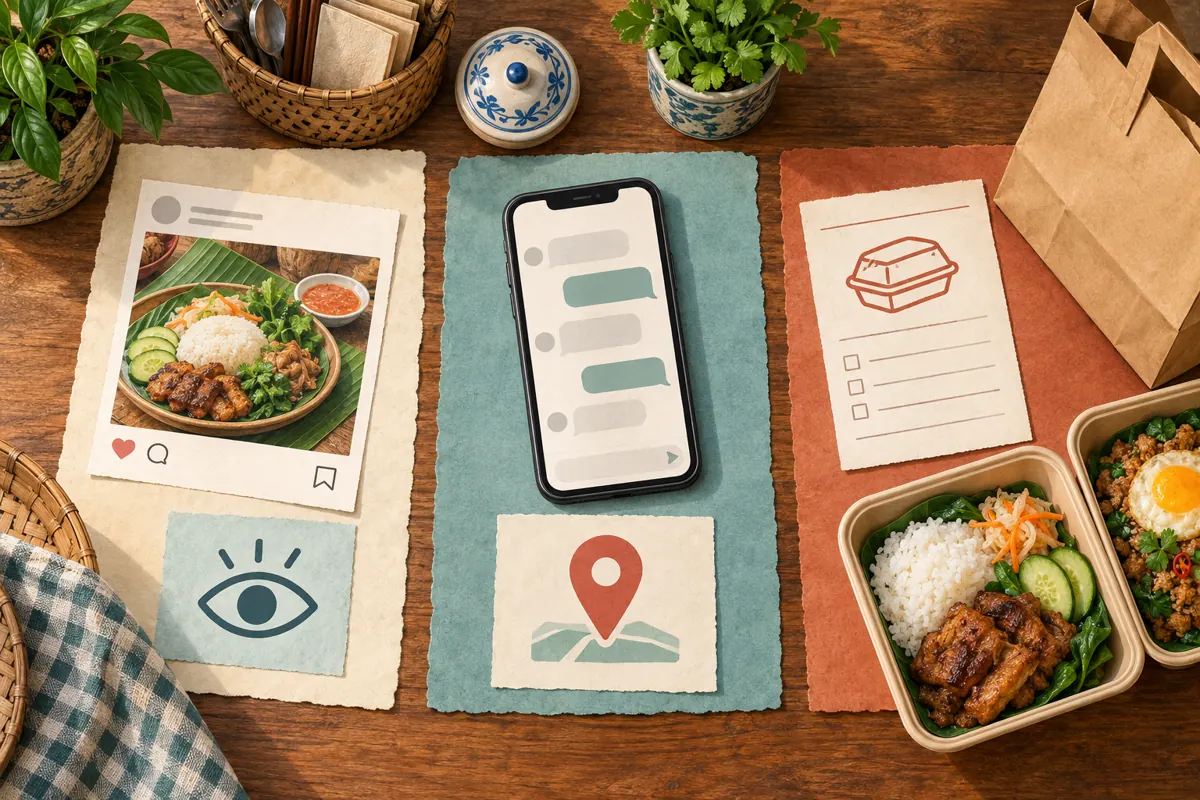
First, verify publication: did the agreed post appear in the correct channel at a useful time with the correct content? Second, review enquiries: did people ask about locations, quantities or meal options you could serve? Third, review confirmed and fulfilled orders using the shop’s own records. These stages answer different questions. An approved draft proves neither publication nor sales, and a friendly message is not an order.
Telegram’s Channels FAQ says post views include forwarded copies and are approximate; the same person may be counted again after time has passed. The counter therefore cannot identify unique local buyers. Record it only with that limitation. For a small trial, a written account of enquiry quality may be more useful than a conversion percentage with an unreliable denominator. Note recurring obstacles such as unavailable delivery areas, unclear portions or an ordering deadline that readers found too tight.
10. Decide what to change before booking again
Use the evidence to choose a specific next step. If the post appeared late, resolve scheduling before changing the food photograph. If people repeatedly asked whether delivery reached their area, clarify the boundary and reconsider channel relevance. If suitable enquiries stalled while waiting for a reply, improve staffing before buying another placement. If the offer produced too little information, acknowledge that uncertainty rather than inventing a success story.
Common mistakes include selecting a channel solely by subscribers, leaving the offer’s date implicit, approving edits without checking exclusions and counting every message as a customer. Another is changing the channel, menu, timing and call to action together, then attributing the outcome to one change. Where practical, repeat a comparable offer while adjusting the clearest problem. Stop the experiment if the partnership requires misleading claims or if fulfilling extra orders would compromise existing commitments.
Frequently asked questions
Is a suggested post the same as buying Telegram views?
No. A suggested post is content submitted for a channel owner’s review and publication. A view service concerns a different activity and does not establish who saw the offer or whether anyone could order. Evaluate a placement through its agreed publication details and the relevant enquiries received.
What if the channel owner wants to publish after the order cutoff?
Do not approve the original time-sensitive offer for that window. Propose a later fulfilment date, switch to an accurate general catering enquiry message or decline the placement. Check kitchen availability before revising the dates; changing the caption alone does not create capacity.
Should a Cambodian lunch promotion always be bilingual?
Choose language according to the intended readers and the channel’s established use. Khmer may be sufficient for one placement, while another benefits from English too. In either case, keep the meal, price, delivery terms and ordering deadline consistent. Have someone fluent review meaning rather than relying only on visual proofreading.
Can a large view count prove the channel is worth booking again?
It cannot establish that by itself. Review whether the post appeared correctly, whether enquiries came from serviceable areas and whether orders could be fulfilled. A counter does not explain audience location or buying intent. When the evidence is limited, describe the trial as inconclusive and identify what a further test would clarify.
What should the shop do when the advertised meal sells out?
Tell enquirers immediately and ask the channel owner about correcting the live offer. Do not silently substitute another meal or continue accepting requests as confirmed orders. Explain any alternative accurately, including its date and terms, and let the customer decide whether it suits them.
Explore the current service catalogue, create an account, or ask a specific question through support tickets.
- Telegram: Checklists, Suggested Posts and More Monetization Options for Channels
- Telegram: Direct Messages for Channels, Voice Trimming, Topic Tabs and HD Photos
- Telegram Channels FAQ
Prepared with AI assistance. Illustrations explain the workflow and do not represent customer results.